
“The almond-groves of Samarkand,
Bokhara, where red lilies blow,
And Oxus, by whose yellow sand
The grave white-turbaned merchants go…”
(Oscar Wilde)
After a days break, it was back to the bustle of borders; once again our new Tajik friends prove embarrassingly accommodating, forcing me forward to wedge a pile of passports and a hopeful name list through the small opening at the immigration booth. It’s a necessary move that will leave the French and Italian groups several hours behind us. After all we have a date with sunset in Samarkand to keep! After immigration we are bounced back and forth between customs officials, completing another two slightly fabricated entry declarations to accompany the previous exit form. After warning the group strongly not to declare any medication, I sweated a little concealing a chest of prescription drugs in my rucksack. Fortunately the customs probing only extended a finger into the surviving whisky infused fruit cake – and our return to Uzbekistan was rubber stamped.
We made good time to Samarkand so I added a stop at the Ulug Beg observatory. Tamerlane’s favourite grandson showed little of his grandfathers’ murderous tendencies preferring to focus on mapping the stars at his 15th century observatory. He said something like ‘Religions dissipate like fog, empires fall but the work of scientists stays forever’. The remains of his mapping sextant – discovered here in the 1920’s – still supports his statement.
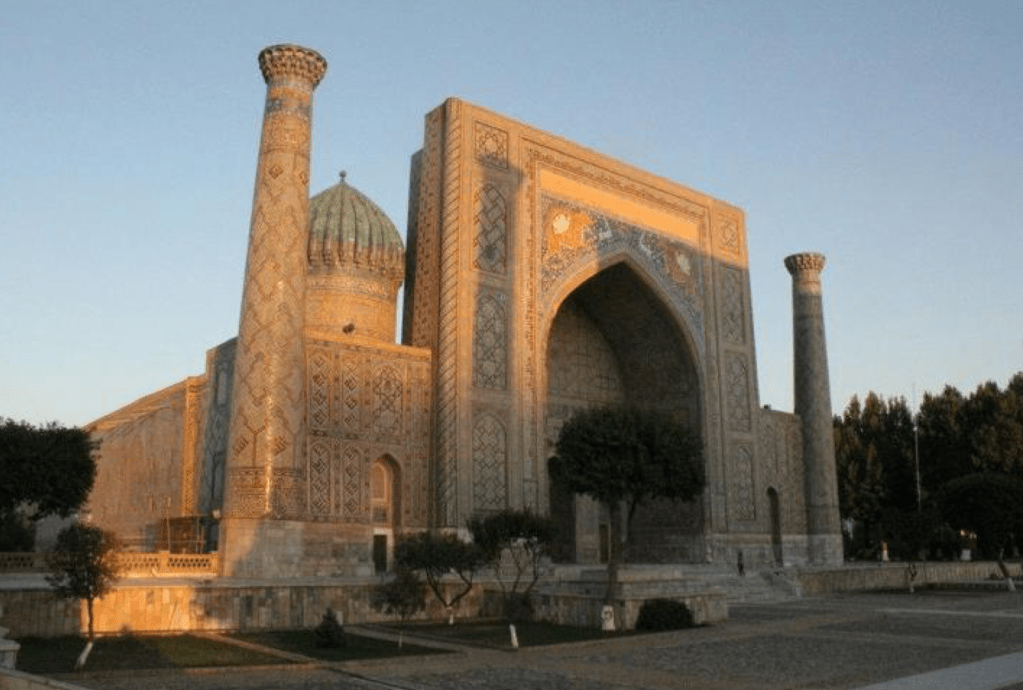
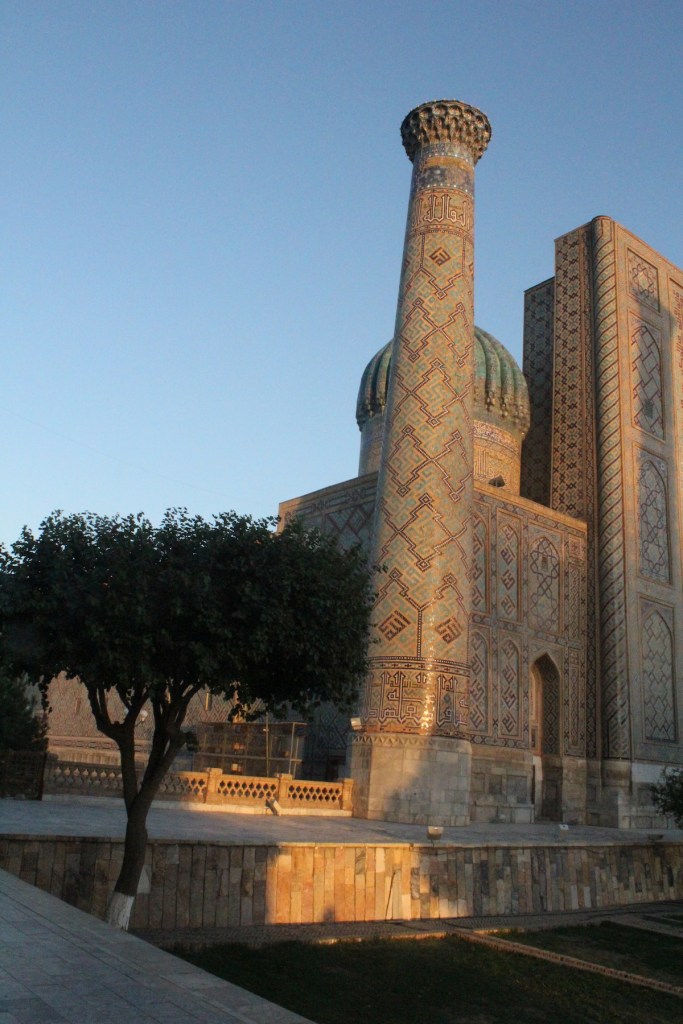
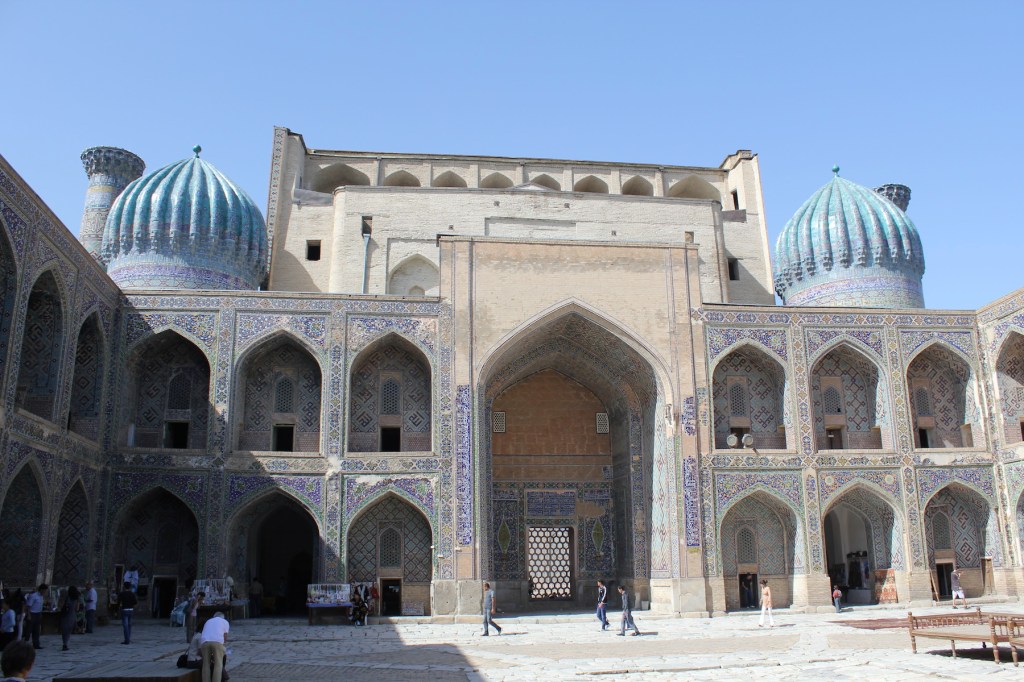
Gentle rays of afternoon sun bathed Samarkand’s most famous monument complex, Registan Square in a golden light as we arrived. This once dusty crossroads marked the centre of Tamelane’s capital. A trio of blue tiled madrassahs towered above us as we gazed skyward in awe of this fifteenth to seventeenth century architecture. It’s the perfect introduction to the turquoise domes of Amir Timur’s (Tamerlane) capital – a stupendous collection of mosques, madrassas and mausoleums rivalling the religious monuments of Esfahan, Damascus or even Luxor. Tomorrow we would immerse ourselves in the beauty of Tamerlane’s legacy.
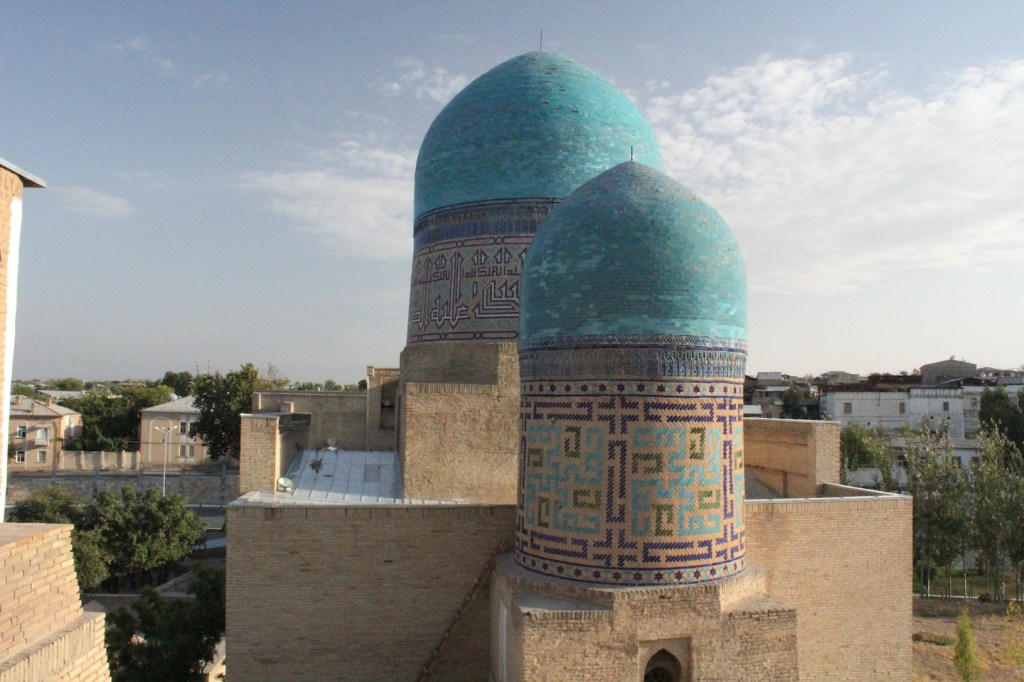
Despite a murderous legacy rivalling Stalin or Genghis Khan, Tamerlane is the Uzbek national hero. A single turquoise pleated dome, littered with Kufic script towers over the jade slab concealing the controversial leaders remains. Inside the spectacular gold painted interior of this Gur Emir (rulers tomb) we watched a group of Fergana Valley Uzbeks participating in pilgrimage rituals. Colourfully scarfed ladies huddled around an old man wearing a traditional felt doppa hat as he recited a blessing which was symbolically caught in cupped hands and drawn down over the face.
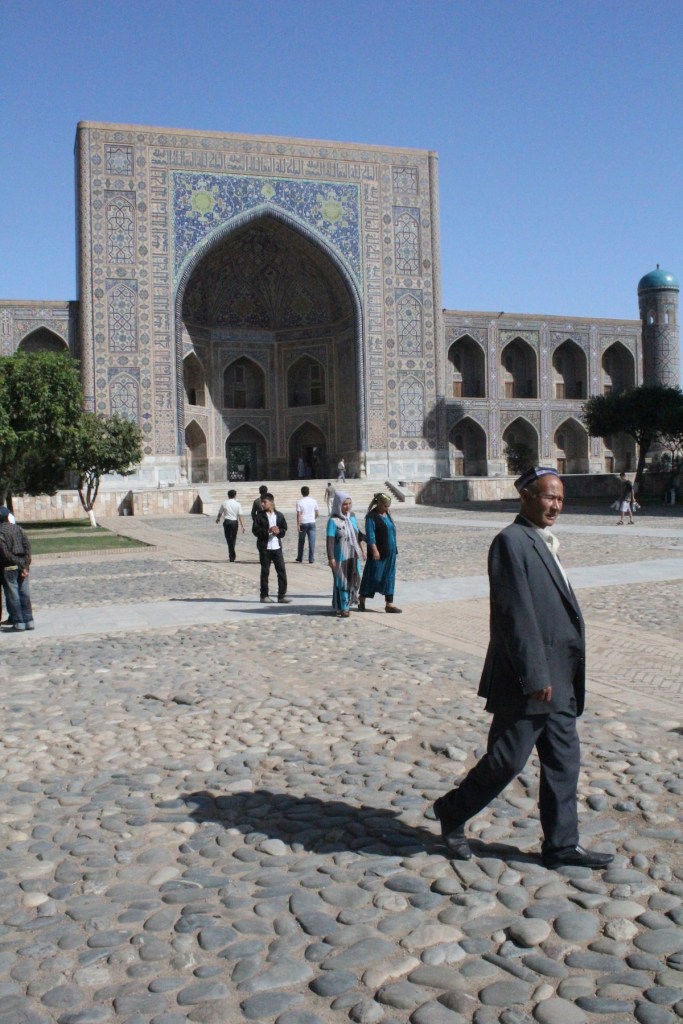
We spent the rest of the day wandering among the stupendous monuments of Samarkand’s old city, marvelling at the Registan Square, glowing different hues of blue in the morning sun, and Bibi Khanom mosque – the result of Tamerlane’s vow to build a mosque with no equal. The (alleged) tomb of biblical Daniel, where busloads of pilgrims pay homage to a eighteen metre casket housing the still growing arm of the Muslim saint. Later we walked in footsteps of Alexander the Macedonian, exploring the mounds of the old Sogdian fortress where the ancient city was born. These Sogdian streets were vibrant and peaceful – until Genghis Khan thundered into town, damming the canals that breathed life into the city and squeezing the lifeblood from two thousand years of civilisation.
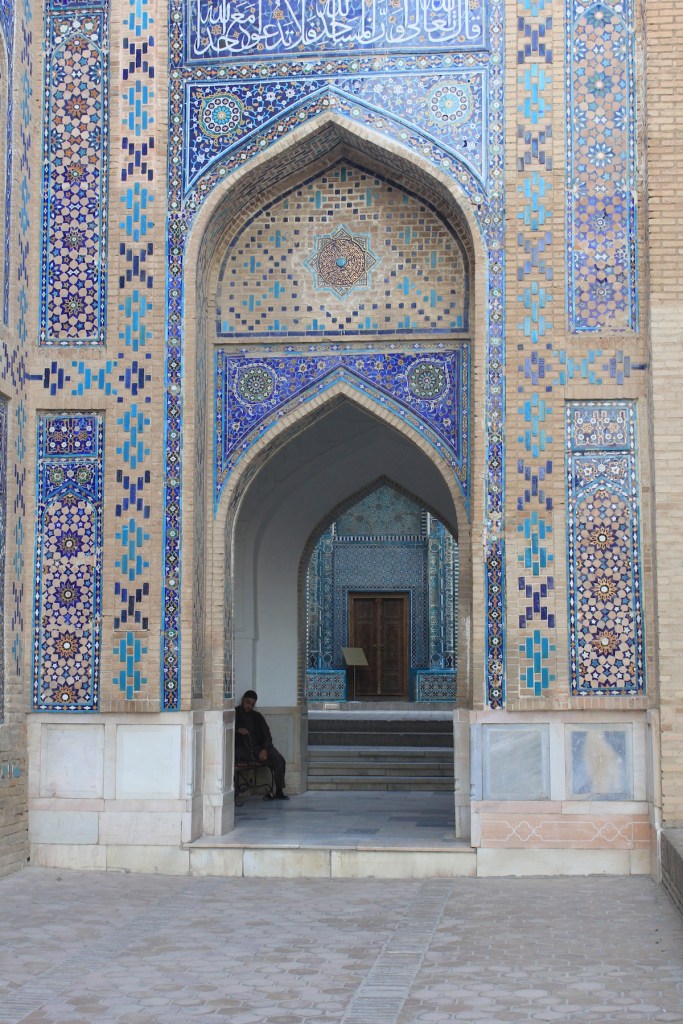
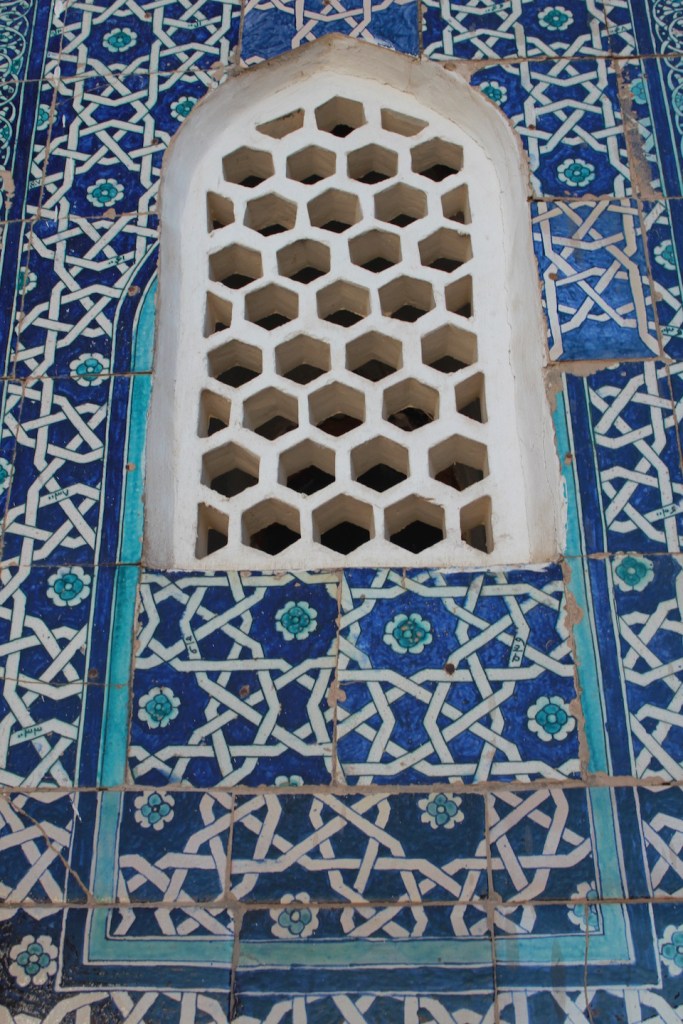
I always like to leave visiting the Shah-I-Zinda, ‘Street of the Living King’, to last. The setting sun befits the mood of this most sacred of monuments, the royal cemetery – and the tourist buses are long gone. On a hill behind the city a narrow path bisects a procession of elaborately tiled turquoise and blue facades, marking the resting places of Samarkand’s rulers. At the end of the inclining walkway lies the most sacred tomb of all – Mohammed’s cousin, Kusam ibn Abbas, bringer of Islam to these parts.


Are you leading any trips in 2022-23? I am keen to travel with you again!
LikeLiked by 1 person