
Before our Zil chugs us, triumphantly, through the spectacular craggy jaws of the Torogurt pass to the Chinese border, I finally manage to find some roadside kumis, produced and peddled by the local plains people. Fermented mares milk is Kyrgyzstan’s national drink and traditionally produced throughout summer in a specially made hide skin bag. Fresh milk is added later to leaven and then the mix is churned and stirred with special wooden stick, a Bishkek. Despite me trying to convince the group of its health properties it doesn’t stimulate the same taste sensations as last nights hot chocolate and Turkish delight..!
I enjoy the idea of walking between countries; it’s an ancient pleasure that flying all to often prevents. The sterile capsule of a modern airport can never compete with a barren outpost at the top of a pass where a biro scrawl in an exercise book is still preferred to a keyboard. Despite my belief in ‘earning’ your passport stamps this particular crossing is described in one guidebook as one of Asia’s most unpredictable borders. Given my deep-rooted punk ideals with regard to authority, I’m prepared for a testing time today! I’ve actually scribbled a map of the various checks, customs searches and immigration posts between Kyrgyzstan and the final immigration post in China – seven dots at altitudes of over 3700 metres, staggered along nearly 200 kilometres of mountain roads.
Fortunately we have all the correct paperwork so five hours after the first scrutinizing of passports, the thud of a Chinese stamp finally confirms our entry into the Xinjiang autonomous region. It takes a further couple of hours on a relatively (as it all is in these parts) decent road to reach Kashgar. Xinjiang, new frontier, was the name given by Manchu Chinese when they expanded into the region in the 19th Century.
Historically this territory was home to the Uighers, Turkic pastoralists who arrived here in the ninth century after their Khanate in Mongolia was crushed as the plateaus’ tribes began to unite. What has happened here in recent times is a sad mirror image of China’s Tibetan program. The central party has adopted a ‘leapfrog development’ policy here that has seen Han Chinese rise from 6% of the population to over 40% in sixty years. The Muslim majority have been considered a threat to regional stability and their culture labelled ‘backward’. There is little distinction between ‘terrorists’ and ‘protesters’; for renewal read relocation. Migrating Han Chinese are the main beneficiaries of the governments incentives and economic concessions that aim to attract two million more settlers. I am nervous about how much of the unique Uigher culture will be left for us to enjoy in the future.
Lasts nights campfire and stars seem like another world as we are suddenly thrust into the deafening din of a Chinese restaurant on the eve of the annual moon cake festival. There’s not another tourist in the place – just local Han people washing down their food with copious amounts of beer and whiskey, celebrating a (contested) 14th century victory over the Mongols. We are directed to a private booth and spend the evening spinning a tasty spread of fresh produce between ourselves and trying to maintain conversation over a cacophony of drunken laugher mixed with the chinking of glasses and bottles.
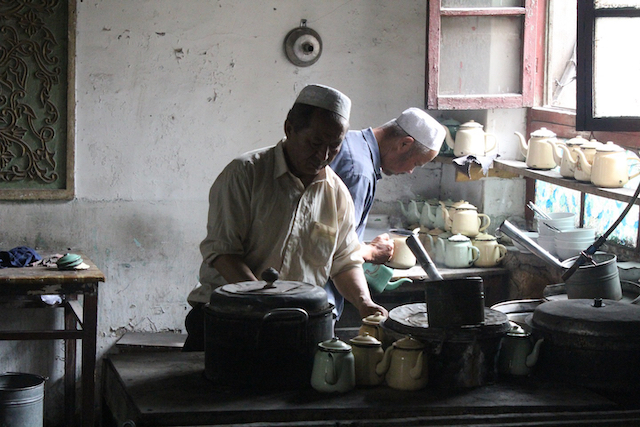
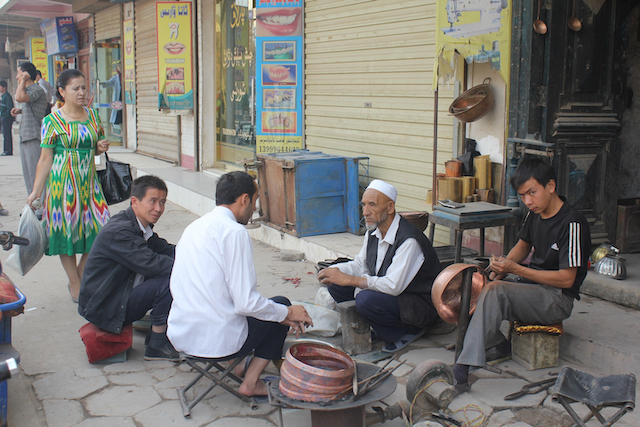
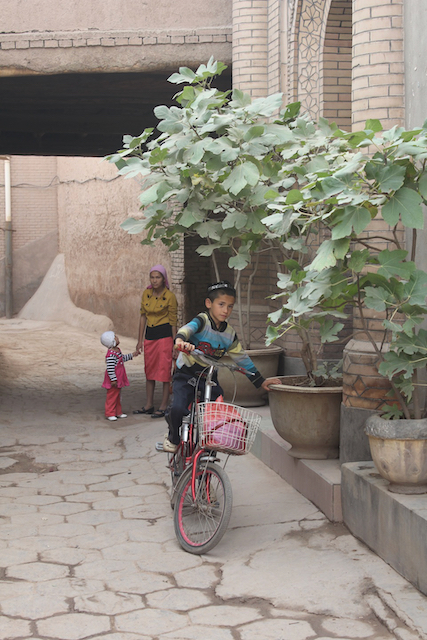
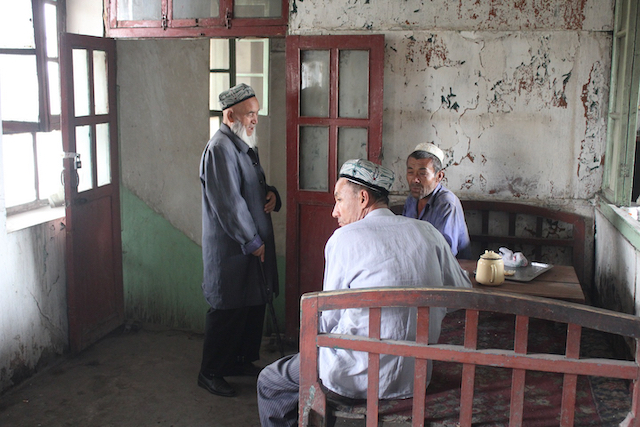
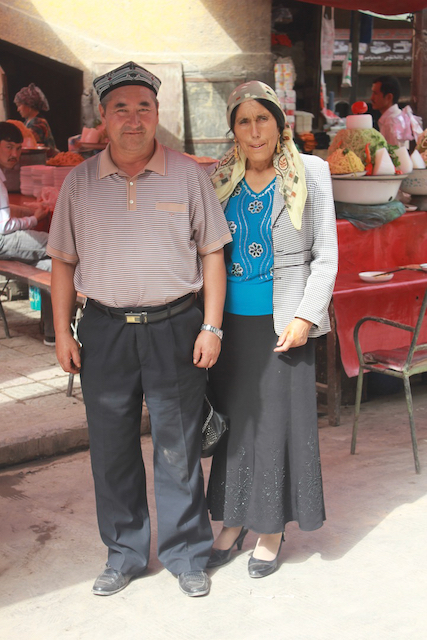
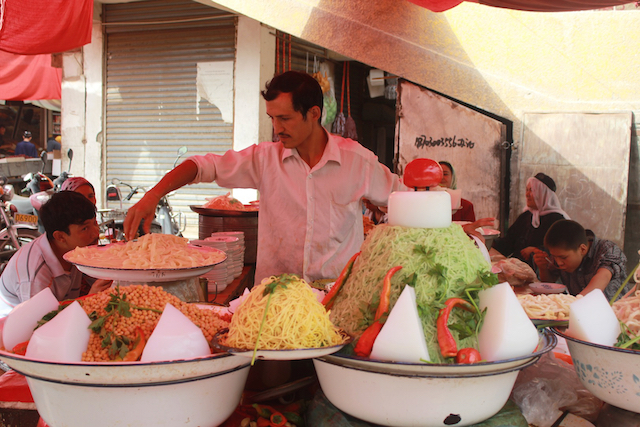
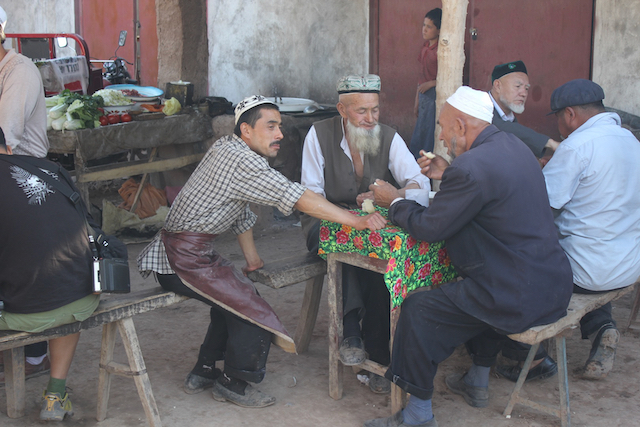
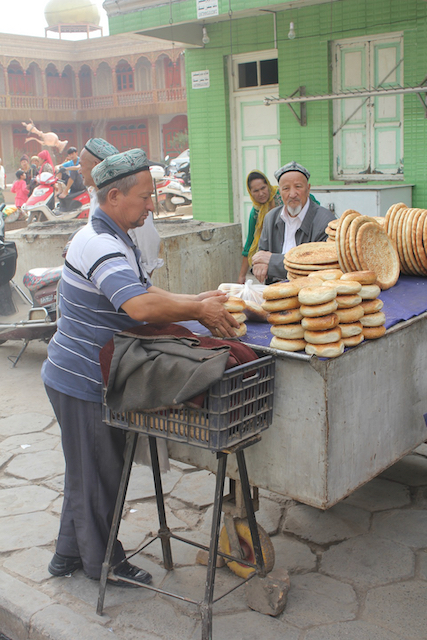
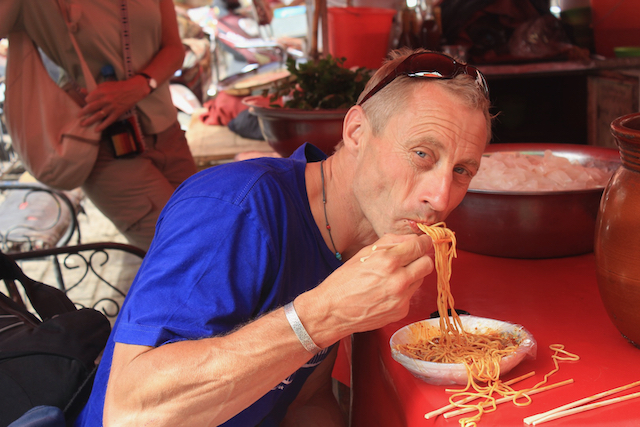
Our tour of Kashgar’s old town of gets off to an ominous start as we are charged to enter a sterile part of the old town, allocated an apologetic local guide and led around an obvious tourist trap of traditional houses and shops. I pry gently into the well-documented destruction of the old city to be told resignedly that ‘it is fell down’ and being ‘refixed’. Fortunately we shake free of the additional guide and move towards the Friday mosque and market area where at least for now, the traditional Uigher lifestyle is being preserved. We amble through the old streets of rickety buildings between street traders. Traditional strings of noodles, lagman, are piled high for a kerbside snack waiting to be painted red with a spicy chilli paste. This is the dish of love, which should last as long as the noodles! Bulbous meat pastries, samsas, and unleavened nan bread are whipped from wood fired clay tonos, to be dipped in steaming bowls of green tea. After the colours, noise and aromas of the spice market we hole up on a dusty Chaikhana balcony. Bowls of fragrant saffron tea and fresh bread accompany the street action below. Motorbikes, bicycles and pedestrians weave around a few lambs lying tied together in the road them, blessing them as they pass. I realise how easy it is to forget that we are in China; Uighers folk are dressed in traditional tunics and dohras four sided skullcaps – it’s how you imagine the Silk Road to be. We continue our wander through the craft streets of the old town admiring the musical instruments, painted gourds and hand pummelled copper work. Our morning finishes with a traditional home cooked Uigher lunch courtesy of our guide Rahmon’s family.
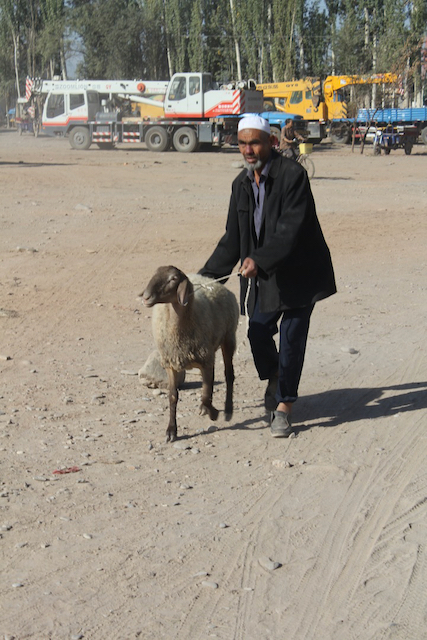
Markets and Morrisons (Kashgar, China)
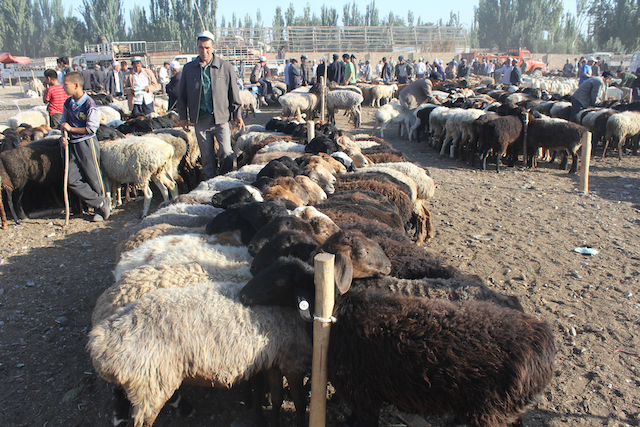
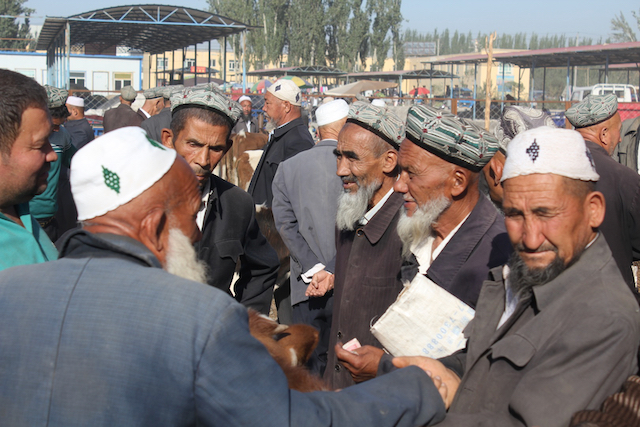
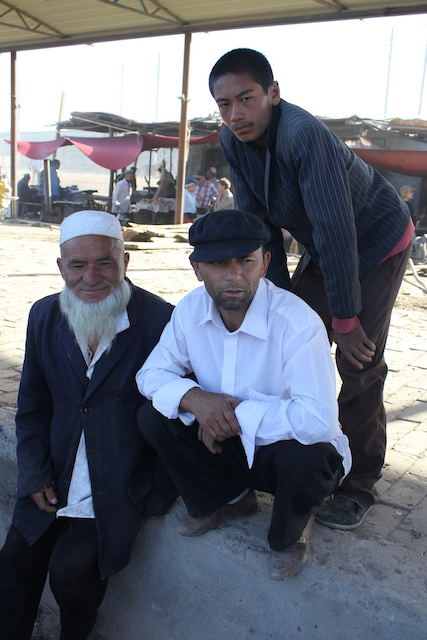
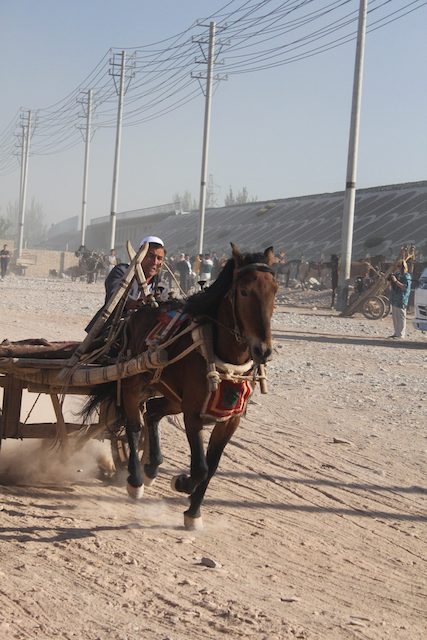
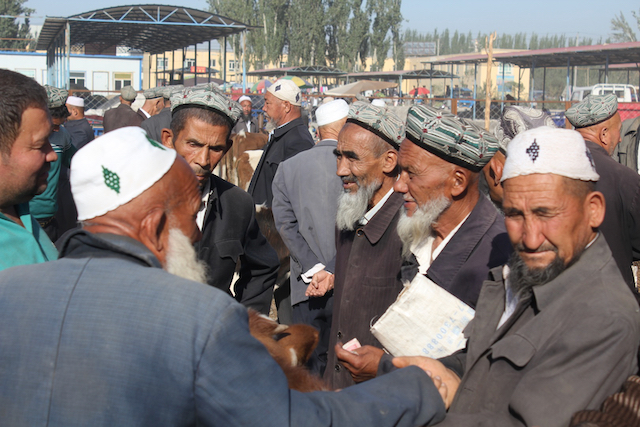
There’s only one place to be on Sunday in Kashgar – the animal market. One of the worlds oldest continuous trading hubs, it’s an opportunity to witness a way of life where only prices change with the passing of time. Arriving early gives us the chance to watch the market build into a sonic fusion of moos, grunts and groans amid the swirls of dust and distinct smell of cattle. Goats, cows, sheep and donkeys are crammed into everything from shiny trucks to wooden carts to converge on a dusty strip just outside the town. It’s definitely a male only affair; manly huddles form amid warm handshakes and hugs – before negotiations commence. The men folk dress in lengthy striped tunics and boots, heads a topped with tall, round or square skullcaps. Facial hair is mandatory; moustaches the minimum requirement but long wispy beards may earn you good credit. Better still are the white beards of the aksakals, elders, which command ultimate respect. By mid morning buyers, sellers and middlemen crowd alongside their cattle busily engaged in one of the world’s oldest traditions – bartering. Secret handshakes inside conveniently oversize sleeves used to seal deals, today negotiations end with a vigorous shaking of hands – and a flash of notes.
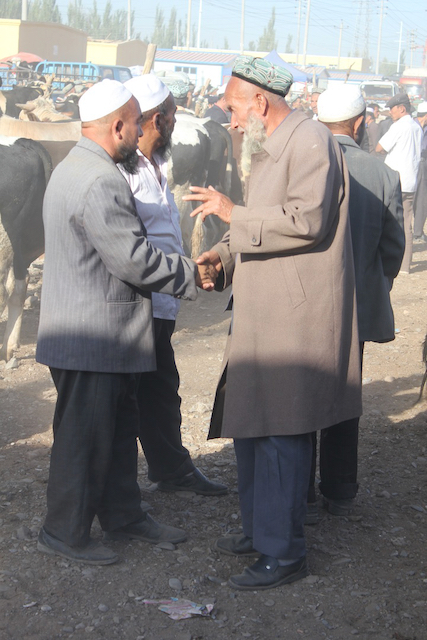
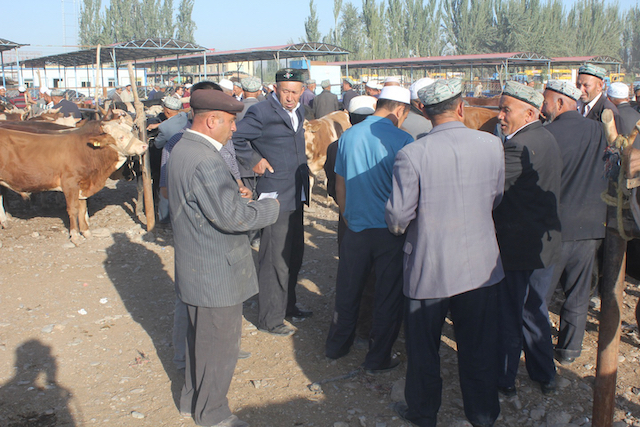
On the fringes of the market men retire to benches beside huge steaming vats of bubbling mutton broth. I admire the warmth with which the men embrace each other enjoying conversation sharing endless tea and the sacred nan bread. By the time we leave some hours later the entire route approaching the market is trapped a gridlock of every conceivable means of transport. Much to the bemusement of the (more patient) local people I find myself untangling the mix of vehicles to prepare a route for our escape.
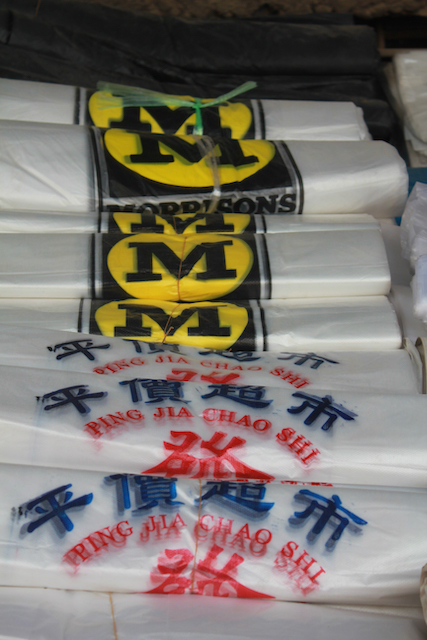
If the morning was about the men folk an afternoon visit to the produce market is all about Kashgars’ ladies. In contrast to the formal gathering of black and greys, this afternoon is brightened by swirls of red, yellow green and orange – the colours of the Kyrgyz, Tajik and Uzbek women’s dresses and headscarves. It’s a relaxed but lively atmosphere, punctuated by cackles of laughter from traders working alongside Uighers and Han Chinese. Everything from shoes to carpets, fruit to jewellery is on offer – bizarrely wrapped in fake Morrisons bags that I’m told are the best quality available! The only item I can’t find is the fresh coffee I have been looking for all along the Silk Route!
After a day on our feet we deserve some pampering so I take the group to enjoy a traditional foot massage. Treatment begins with gentle bathing but develops into something more serious as naked flames, popping, suction and hot coals stimulate our soles – amid fits of giggles and tickles. Refreshed and relaxed, we squeeze ourselves into the town’s top Peking duck outlet this evening to join the moon cake festivities.
 The Lonely Chopstick
Heya, long time no speak, probably my fault, and hope all’s well. Enjoyed reading all this, and thoroughly jealous. I’ll reappear at some stage, promise. Pls say hi to the HMV crowd, I’m out of touch with everyone at the moment. Px
LikeLike
Hi Philippa – I just saw this sorry! I arranged a little get together in the summer which was fun – i’m dong again this July should you wish to re-appear! https://flic.kr/s/aHBqjB855d
LikeLike
Hiya, no worries – it’s good to hear from you! I’m out of action at the moment (long Covid) so the social life has been a big fat 0 for a few months now. Let me know when you’re going to be back in town – I’d love to see everyone and I hope I should have some energy by then!
LikeLike