
Today is the first day of Noruz, the Persian New Year. This ancient festival can be traced back 5000 years to Sumerian times. It is steeped in Zoroastrian tradition and Persian legends, celebrating the first day of the first month, Farvardin, of the Iranian Calendar. It’s. I’ve been fortunate to be in Iran several times during Nuruz, sharing a time when Iranians traditionally forget their troubles, bring their families together and travel around the country’s wonderful cultural sites to picnic. Coinciding with the spring equinox, the festival is a time to celebrate renewal and hope. This year’s Persian new year is marked with the sound of explosions around Tehran and little hope of an end to the suffering of ordinary Iranians.
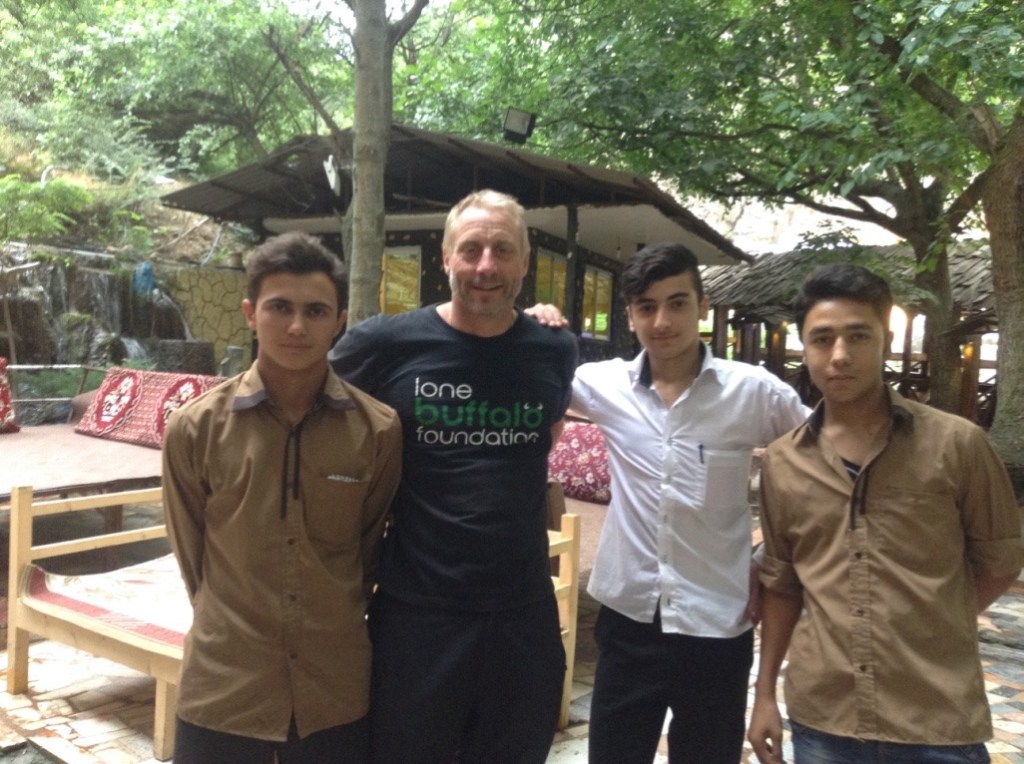
Just over 10 years I descended from the summit of Iran’s second highest peak, Mount Alumkuh, after celebrating my 50th birthday at the summit with my regular mountaineering companion and good friend Cyrus.
En route back to Tehran we stopped at one of the pretty garden restaurants that dot the mountain road back to the capital. Amid the smell of burning charcoal and sizzling shashliks I was engulfed by young Iranians shaking my hand and saying ‘JCPOA, thank you’. Unbeknown to us as we were wearily weaving our way down through the snow something infinitely more significant than my 50th had just taken place; after almost 2 years of tough, tense negotiations a nuclear deal had been signed. The atmosphere in Tehran was equally palpable; there was hope and a new dawn for Iran. President Rouhani and Mohammed Zarif, the wily US educated Iranian negotiator, had convinced Khamenei and his hardliners that the west could be trusted.
Over the next few years, the stability the deal brought sparked a development boom. Cranes dotted the Tehran skyline as new hotels were built for westerners and neighbouring visitors alike. Intrepid European tourists (only US, UK and Canadian nationals needed visas) flocked to enjoy the legendary Persian hospitality, wonderful food and historical treasures. As we picnicked in parks and drank in teahouses with locals, almost every client would return home with the message confirming that Iran was the friendliest place on earth. Restaurants were full in spring and autumn and I even took to calling my postcard seller friend to reserve my regular picnic spot on the wall beside the pretty mosque in Na’in, a popular stop on the road south to Isfahan.
There’s a good chance that some of those young men who celebrated the JCPOA deal are now resting in the Behesht-e Zahra Cemetery, the huge complex near the international airport that houses victims of Iran’s turbulent past and brutal regime; the ‘purifying’ executions of early 80’s revolutionary Iran, martyrs of the Iran – Iraq war, victims of last year’s Israeli and US bombings and those slain in a bloody history of deadly crackdowns. Some victims of the latest massacres weren’t even afforded a marked grave; dumped with other protesters with their whereabouts unknown to their families.
How did we get from the elation of 2015 to a situation where 14 countries have been hit or targeted and million-dollar planes have spiralled from the skies. Where a lightly armed Iranian vessel, invited to participate in an Indian Naval celebration, was sunk 2000 miles from the warzone. Needing little encouragement to resume ‘mowing the lawn’ Israeli troops are once again rampaging through Lebanon and their warplanes flattening parts of southern Beirut. The death toll approaching 1000 – including over 100 children – which will rise significant as Israeli boots won’t be leaving Lebanon anytime soon. Over a million Lebanese have been displaced. 300 Palestinians have been added to the death count by Israeli troops or settlers in the occupied West Bank. Gaza remains an barren expanse of stone age like rubble. Military bases that were supposed to protect Gulf countries have instead made their hosts targets for Iran’s retaliatory strikes. If the war lasts Trump’s (conservative) 4 – 6 weeks forecast costs could top $500 billion.
On the ground in Tehran joobs (water channels) that skirt the tree lined avenues should be bringing snow melt from the mountains, watering the spring blossoms that mark Nuruz, the Persian New Year. Instead, these scents of spring were replaced with the choking stench of burning oil running through the streets – and a polluted rain falling on those brave enough to venture outside.
How did the world’s most powerful superpower, a country of almost 350 million people get led into war against one of the world’s oldest civilisations by country of 10 million, controversially created less than 80 years ago? Few people are fooled into thinking this is about saving the Iranian people from a brutal dictatorship; there’s much bigger plots at play here. Remember the US has a history of provoking regime change in Iran – ironically in 1953 they initiated a coup to overthrow the region’s only democratically elected leader – Mohammed Mosedeq. The motive? To reverse the nationalisation of Iran’s oil industry which had fuelled 2 world wars with little benefit for the Iranians.
In 2016 Trump vowed to rip up the Iran Nuclear deal on his first day in office. He eventually pulled the US from the deal in 2018 which triggered the timeline that has brought us here 10 years later. Within 2 years of scrapping the JCPOA deal the US assassinated the hugely influential IRGC Commander General Soleimani in Bagdad. Not a nice guy for sure – but he had strong control over all the Iran backed militias. Iran had been largely complying with the conditions of the nuclear deal. Khamenei and his hardliners had been proved right – the US could not be trusted. The reformist president Rouhani was succeeded by Raisi, a vicious hardliner and a key figure in the ‘cleansing’ killings that followed the 1979 revolution. Iranian proxies were freer to operate independently; it’s generally believed that Iran was genuinely surprised by the October 7 massacres. Given the predictability of the catastrophic outcomes Soleimani may have been able to rein Hamas in. Both the Houthis and Hezbollah build their own weaponry and raise their own funds. The Houthis and the Popular Mobilisation Forces (PMF) in Iraq have been remarkably quiet (so far), as they increasingly focus on internal causes.
Israel, with its estimated illegal stockpile of 200+ nuclear warheads, has always craved to be the middle eastern superpower. They’ve watched with envy as Dubai and Qatar have developed peacefully into western leaning nations, offering hubs for tech and AI and hosting major sports events and expos. Even Mohammed bin Salman muted his support for the Palestinians and was rewarded with a Whitehouse banquet – the brutal killing of critic Jamal off the menu of course. Meanwhile Israel’s actions in Gaza and annexation of the West Bank have left them increasingly isolated on the world stage.
Netanyahu was heading for an election defeat in the aftermath of the rubble of Gaza and, still not having answered key security questions, facing criminal charges at home and abroad. The timing of the attacks was important too. Just as with last year’s ‘obliteration’ of the nuclear facilities there were positive signs coming out of the negotiations from the Omanis. The huge military build-up may have been working, pressurising the Iranians into a deal. Credible reports claim that Iran put it’s key bargaining chip, 400+ kg of enriched uranium, on the table to be taken away or diluted. Seeing the last of his supporters shaking hands with a sworn enemy would be too much; any US – Iran deal would be catastrophic for Netanyahu personally. He told Trump he was going to take out the Supreme Leader.
Trump jumped onboard again, as he did last July. The Epstein files were closing in on him. Stumbling for justification on taking his country into war for the first time in over 20 years, Trump ‘had a feeling’ the Iranians were going to launch an attack and claimed his actions were pre-emptive. ‘Perhaps’, ‘it’s likely’ and ‘I guess’ have littered his mixed messaging ever since as he fumbles to work out an end game. Understanding they can’t outfire the US, the Iranians quickly switched to an asymmetrical war with global consequences. It’s not about who has the biggest bombs, more about who has the smartest minds. Think Vietnam.
Presidents surround themselves with advisors. Rather than foreign policy experts we see knowledgably analysing situations in the media they choose people who say what they want to hear. How many times has ‘tinderbox’ been the adjective used describe the middle east? Pitching your son in law (whose Affinity Partners equity empire just happens to receive $US3.5B from the Saudis and Emiratis) and a billionaire real estate developer against Iran’s veteran JCPOA negotiators and wily Foreign Affairs Minister is unlikely to yield a quick, favourable outcome.
In stark contrast to Trump’s ramblings Pete Hegseth, a slick backed former TV celebrity decorated with crusader icons, talks with gleeful precision about weaponry, death and destruction. The bombastic tone changes when asked about the US Tomahawk attack (possibly AI initiated), which killed 165 schoolgirls from the Shajareh Tayyebeh School in Minab. Three weeks on, the Secretary of War is ‘looking into’ this possible massacre. If that had been Tel Aviv it would have been splattered across western media screens. Days later Hegseth boasted (not talking about that incident) ‘No one’s putting us in danger. We’re putting the other guys in danger. That’s our job. So, we’re not concerned about that. We mitigate it as we need to. Our commanders factor all of this, but the only ones that need to be worried right now are Iranians that think they’re going to live’.
Hegseth’s crusader tattoos also bear significance. This conflict has deep religious overtones. Mike Huckabee, the Christian Zionist US Ambassador to Israel, believes the Old Testament is best way to define international borders – ceding the lands of Palestine, Lebanon, Syria, Jordan as well as parts of Egypt, Iraq, Saudi Arabia and Turkey to Israel. The Military Religious Freedom Foundation (MRFF) received over 200 complaints that military commanders have invoked extremist Christian rhetoric about biblical “end times” to justify the war, even claiming Trump was anointed by Jesus to light the fire and bring Armageddon and Jesus’s return to earth. Hegseth closed a recent press briefing on the war with a prayer from Psalm 144, “Blessed be the Lord, my rock. Who trains my hands for war and my fingers for battle.”
The regime change narrative has been swept aside with the Islamic regime dug in and replacing one Khamenei for another – a seemingly revengeful and petulant decision rather than a pragmatic one. Like his father before Mojtaba is not a Marja – the highest level of Islamic scholars – and has produced no religious literature. It’s a succession that Khomeini or even Khamenei would never have endorsed, given their disdain for the hereditary line of royalty that preceded the revolution. If the ailing 86-year-old Khamenei had died naturally his son’s nomination would have been more vehemently opposed by reformist influencers like former presidents Rouhani and Khatami who are striving for national reconciliation. Instead, the biggest decision the regime has taken in 37 years was made remotely with the 88-member Assembly of Experts under the protection of the IRGC – whose strongly endorsed the selection of Khamenei’s son.
Just weeks ago, both a smug looking Netanyahu and Trump invited Iranians to rise up and ‘take your nation’ – against the same IRGC firepower that had slaughtered thousands of their friends and relatives’ weeks earlier. Most Iranians are desperate for change, but they are not stupid. Patience is a cultural trait in this part of the world. Checkpoints have now appeared around Tehran with regime supporters patrolling the streets, waving nationalist banners and hunting dissenters.
Exactly who was being invited to ‘rise up’? Like most of the region Iran is a rich tapestry of ethic and religious groups. Discounting the estimated 15 -20 million regime supporters leaves us with Turks (10% – 15%), mainly Azeri’s in the west. There’s a reason why the IRGC’s biggest garrison is just outside of Tabriz, beside the Turkish border.
The harsh deserts of the south are inhabited by, mostly Sunni, Arabs and Beluch. Sharing similar territories are the tribal Qashqai’s, Shia converts who don’t particularly favour the revolution or the monarchy that preceded it. There were reported US meetings with Kurdish militias in Iraq. The US left them hung out to dry for Saddam in Iraq and more recently Syria. Turkey has fought bitterly against the Kurdistan Workers’ Party (PKK) and, despite the 2025 renouncement of violence, they are designated a terrorist organisation by US, EU and the UK. The Kurds themselves say the only friends they trust are the mountains in which they dwell.
Then there’s the MEK, a cult movement endorsed by neocons Rudy Giuliani and John Bolton based on a synthesis of Marxism and Islam taught by Ali Shariati. The majority of Iranians are of Persian descent – but that by no means unites them. Some support the return of the Pahlavi family line in a transitionary role, at least. Older Persians may remember the widespread poverty and corruption of the 70’s whilst their king threw the world biggest party at Persepolis, often seen as the spark which ignited the Islamic Revolution. Or were the US and Israel inviting everyone (bar then 20 million regime supporters) to rise up, creating factions and pacts along religious and ethnic lines, likely to replicate the civil wars that happened in Iraq, Libya and Syria. The flawed policies that created the vacuum for ISIS to exploit. Maybe that was the masterplan; create mass unrest so the US could go in and take control of the oil as they have done in Syria and Venezuela. Cuba has oil too, incidentally… Trump has already said that the map of Iran would “probably not” look the same after the war— much to the alarm of fiercely proud Iranians. For now, fortunately most of the fighting between factions is being done virtually on social media.
Geopolitically, while China and Russia are urging restraint they are happily watching – and aiding – the rapid depletion of the world’s greatest armoury. Focus has shifted from Ukraine. China may see the chance to use the demise of the global order rulebook to finally annex Tawain.
So what happens next? Netanyahu is in the ascendancy. He has assassinated the Supreme Leader and countless senior officials. The IRGC and Hezbollah have been seriously hit. A wedge has been driven between Iran and the Gulf nations. Focus has shifted from Gaza. The polls are looking good.
Meanwhile Trump needs a victory. The death toll has already exceeded 2000 and little is said of almost 200 US servicemen being injured. Regime change is likely to fail. The Straits of Hormuz are closed to the US and their allies. People around the world are queuing for fuel. The enriched Uranian is off the table and remains hidden somewhere in the vast Iranian deserts. A rift is developing between the US and Israel, who are now taking out anyone they can in an attempt to block the off-ramp Trump needs. Despite hardening his stance since the death of Khamenei, Larijani was seen as a pragmatist with links to all the complex nodes of Iranian politics. A veteran of the JCPOA agreement; the most likely person the US would reach out to…
For their part all the Iranian Regime need to do is survive to declare victory – and with the hardliners back in control the hopes of most Iranians lie in tatters once again.
Zihla, a Tehrani filmmaker summed up the hopelessness of the situation where people despise a regime that kills its own citizens but hates seeing their country destroyed by foreign bombs. ‘We tried it all, so even if I am against this war, I do not believe we have an option but to seek help. How many die is something that’s killing me inside, but also how many were killed by the regime is still fresh on our minds. We have become so numb after what we saw in January that now we are in a strange state of mind.”
 The Lonely Chopstick