
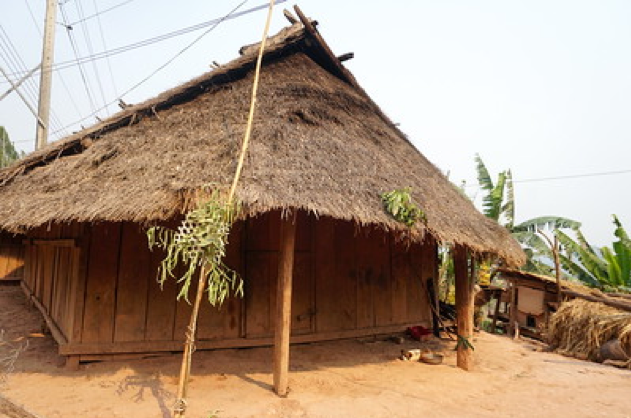
In Laos, Social Distancing is imposed by nature. With a population of 7 million occupying a mountainous land mass roughly the size of the UK, Laos can claim to be the most socially distanced country in South East Asia. This geography may have helped save Laos from a Covid-19 disaster.
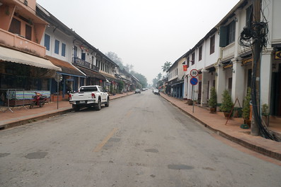
With just 6 people in hospital, no deaths or new cases for over a month, Laos is easing itself out of lockdown. Six weeks ago, it was different. I had experienced what should be a Tour Leaders dream – a UNESCO World Heritage Town devoid of tourists. Instead it felt as if the soul had been ripped from Luang Prabang. Now, as the local authorities use this lull to improve cultural sites, I’m looking forward to seeing tourists again…
As late afternoon clouds steadily enveloped the forested mountains beside the Mekong, a surreal sense overcame me. The country I had come to love as home for more than 8 years was no longer an oasis of calmness and smiles. Shutters had come down, gates were locked and restaurants closed. String looped around the local stores preventing anyone from entering. Everyone wore a face mask; people were frightened. Luang Prabang, often voted Asia’s favourite ‘city’ was closed to tourists. Now was not the time for sightseeing – but the time to lock down and protect.
Laotians are well aware of the frailties of their healthcare system. As with other developing nations the impact of a rapid spread would prove devastating. They are not strangers to suffering either. Older Laotians endured the hardships of living in caves during nine years of continual bombing. Lao people – and their government – understood how to respond to this new threat.
Provincial travel was limited to supplying essential food and medical supplies. The government set prices for food staples, masks and checked businesses making hand sanitizer. The rough alcohol produced in villages tripled in strength as the government stipulated sanitising solution must be at least 70 per cent proof. The sale of (consumable) alcohol would be banned during the Lao New Year. Chiefs cordoned off their villages and checked who came in and out.
I needed to return home before my provincial border snapped shut. The bus stations were closed and the last flight to the capital had already departed. An eight-hour road journey was the only option to return to Xieng Khouang.
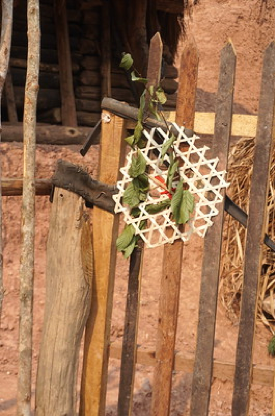
The surreal sense I had felt beside the river returned as the van twisted in and out of the clouds and villages along Route 13. Usually I’d be enthusing about ethnic diversity and customs to clients, occasionally stopping to explain first hand. Now though, as we passed through the dusty mountain villages, every house – bamboo or brick – had a taleo on the gate or door. This hexagonal symbol made of interwoven bamboo and leaves indicates that you must not to enter. It is used if someone is sick or a shamanic ceremony has taken place. Now it meant villagers were self-isolating, but more in accordance to their traditions than any government directives.
By late March the first cases in Laos were reported. 2 became 3 in Luang Prabang. Then Vientiane. The numbers crept up steadily to 18, then 19 before plateauing and – mercifully – returning the other way.
As with everything in Laos, there’s an element open to interpretation. Despite the lack of water fights and ghetto blasters during new year, shops selling Hawaiian style shirts, synonymous with the celebrations, were deemed ‘essential’ and allowed to trade. Local mini markets would ‘loan’ the odd crate or two to thirsty villagers to avoid the ban on buying alcohol. My local lockdown gate patrol, suitably refreshed from an afternoon of cards and covert beers, would drift away as the sun started to set.
Markets may be the people hub of any rural Asian town, but ordering them to close would cut the community’s life blood. Small traders rely on the market to make their livings and villagers to feed themselves. Some traders who could survive stayed home and people did their best to social distance among the fresh produce. Temperature checks were introduced at the entrance. The war time public address systems are still an effective way of communicating important messages to communities.
As with most rural cultures the family unit is at the heart of society. Families eat, sleep and socialise together. As farmers, aside from regular trips to the market, life centres around the home or the farm. There was a joke during the Asian financial crisis that whilst stock markets were crashing around us, in Laos it was just ‘farming as usual’. It seems again, for now anyway, Laos’s geography, culture and the stoicism of its people have helped save it.


 The Lonely Chopstick