
Leaving the splendours of Samakand behind us, we took the ‘Royal Road’ to Bukhara. This 270-kilometre journey would take the Silk Road caravans six or seven days – considerably longer if they stopped to trade or rest at the caravanserais dotted along this ancient route.
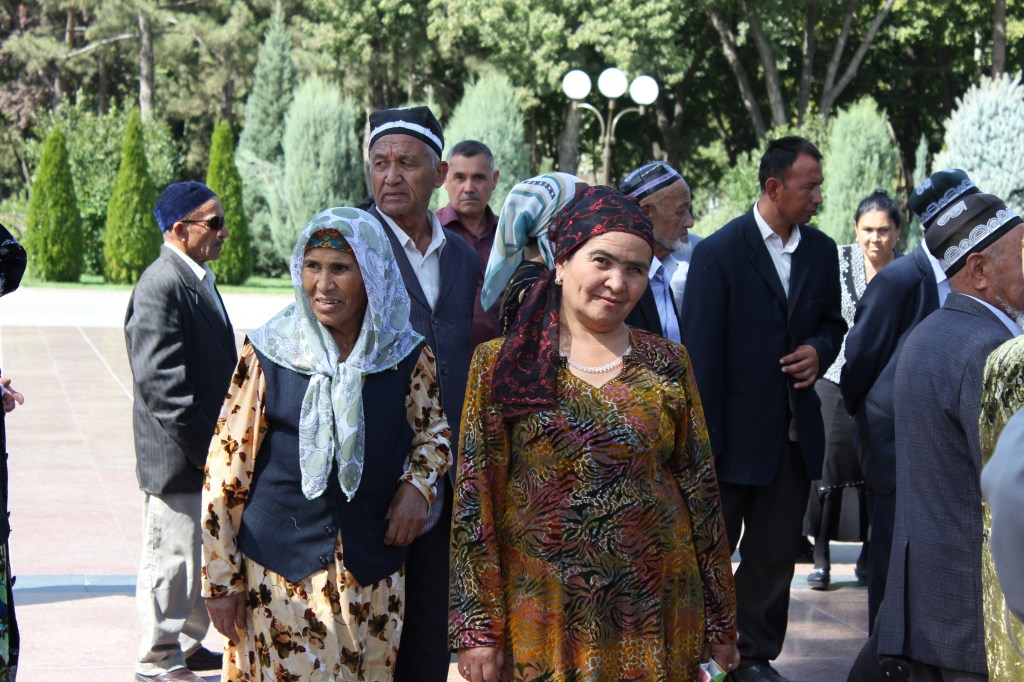
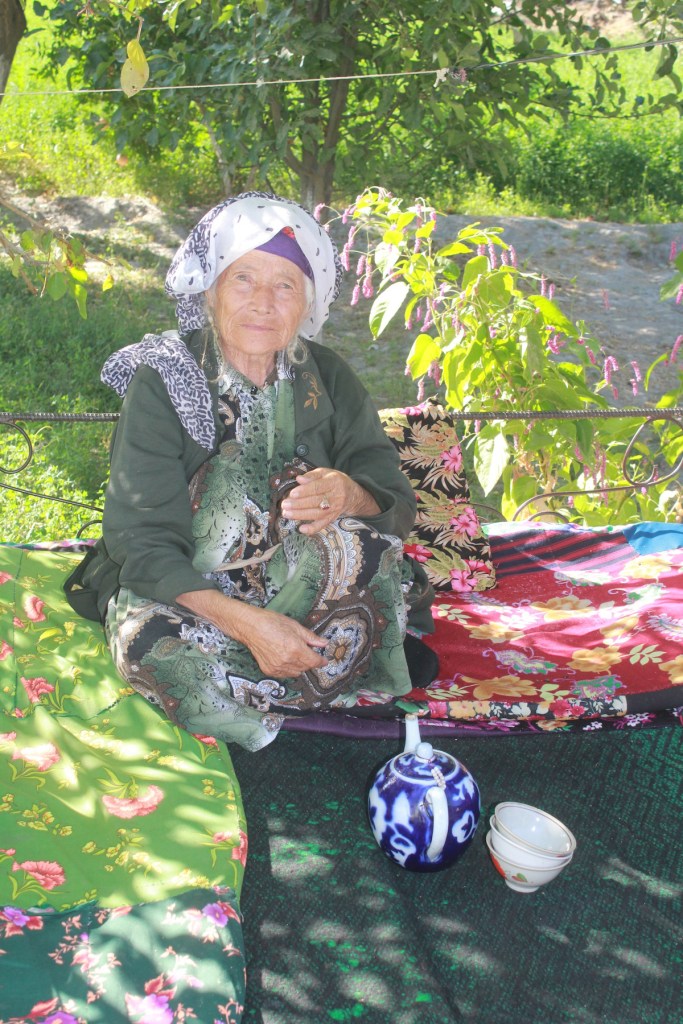
The road offers a great opportunity to witness rural life close up. Having stopped at several different villages on this road, I know that a traditional Uzbek welcome is never far away! An hour or so from Samarkand we clambered out of our bus and down the mud road that leads to Arba village. We arrived just in time to watch the village ladies bring their milk out to the roadside for collection. We provided instant amusement for the colourfully dressed women folk, whose collective laughter revealed a treasury of gold-toothed smiles. We are beckoned in for tea, but reluctantly decline to explore deeper into the village. The ladies try again, this time asking that we visit a near 100-year-old relative. So inside a large courtyard sitting on a Chororya, tea bed, we met the lovely Rakima who offered tea and blessings as one by one we queued to shake her hand.
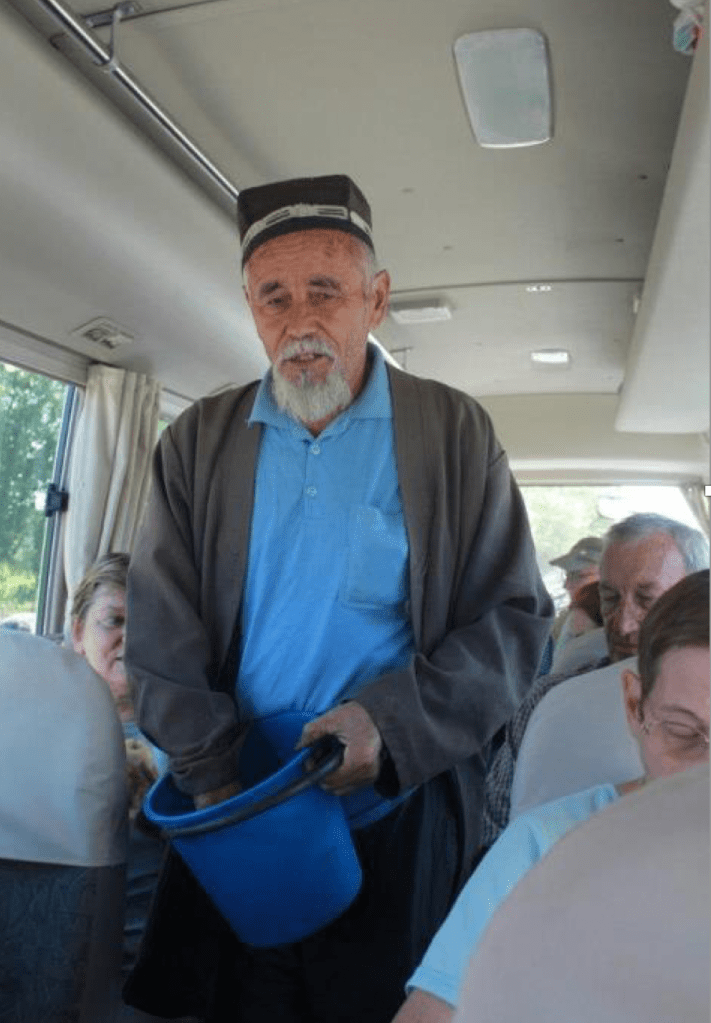
By now we had attracted the attention of local schoolboys, and I lost sight of my group as I stopped to talk. My latest friends soon pointed me to another house, where the head farmer of the village was generously spreading local honey on home baked bread and passing round tea. Before we can depart the chap whose tea we initially declined is back with us wandering around the bus, handing out his apples from a bucket. As in Tajikistan, we feel warmed and humbled by the genuine hospitality of the locals towards strangers.
Another splendid collection of religious architecture awaited us in Bukhara – with the addition of trading domes and the fortress that protected the powerful independent Khanate. Our afternoon’s amblings beyond the tourist paths led us around the mud brick backstreets of the tiny Jewish quarter, where we were welcomed into a working synagogue. Later I arranged a slightly bizarre Uzbek wine tasting session before dinner. Our hosts Jamal and Lutfaya welcomed us with Swiss and UK flags before talking us through a selection of Uzbek wines. A spicy muscatel came out winner – and a bottle was procured to accompany our well-travelled whisky cake to Khiva.
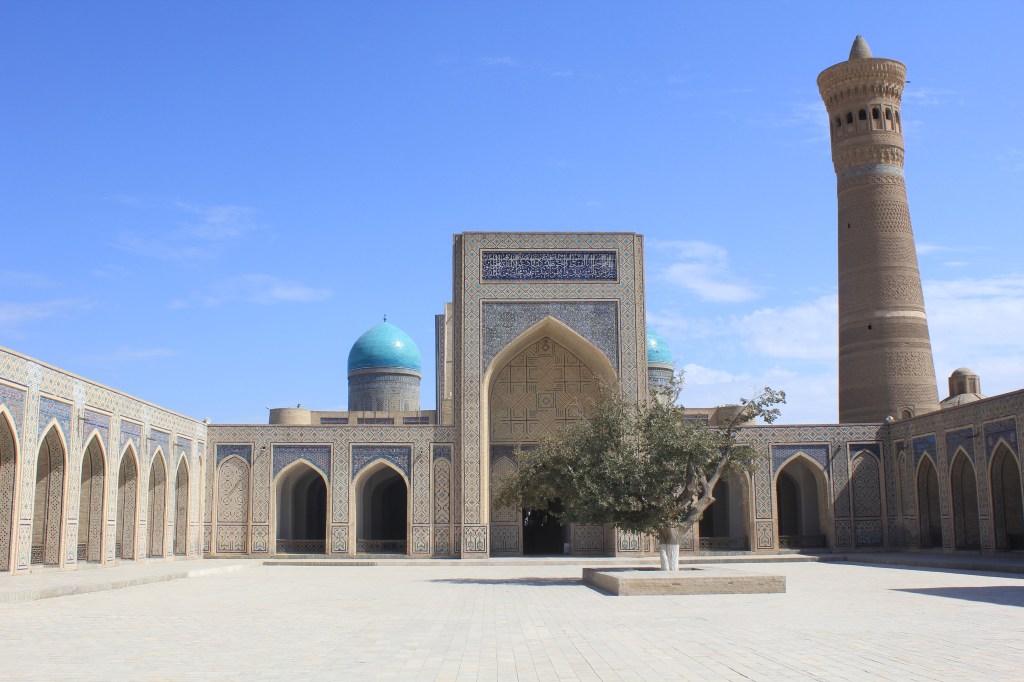
Our second day in Bukhara began with a visit to the stunning stone-carved cube mausoleum of the tenth century Persian ruler Ismael Samani. Adopting the city as their capital The Samanids ushered in a new era of Persian influenced creativity and culture. Later we wandered from the imposing Ark, fortress, through back streets to the towering baked brick Kaylon minaret, which towers nearly forty seven metres over it’s mosque. As the sun sets on our visit to this famous Silk Road trading post, some of us retire to the Hammam, the traditional bathhouse. Here we sweat desert dust from our pores, as the aches and pains of three weeks on the road are expertly pummelled from our muscles. If that’s not enough pleasure, we tingle in apricot and ginger rub, until a succession of cooling buckets of water concludes the hedonism.


The Chor Minor and the stunning brickwork of the Ismael Samani Mausoleum
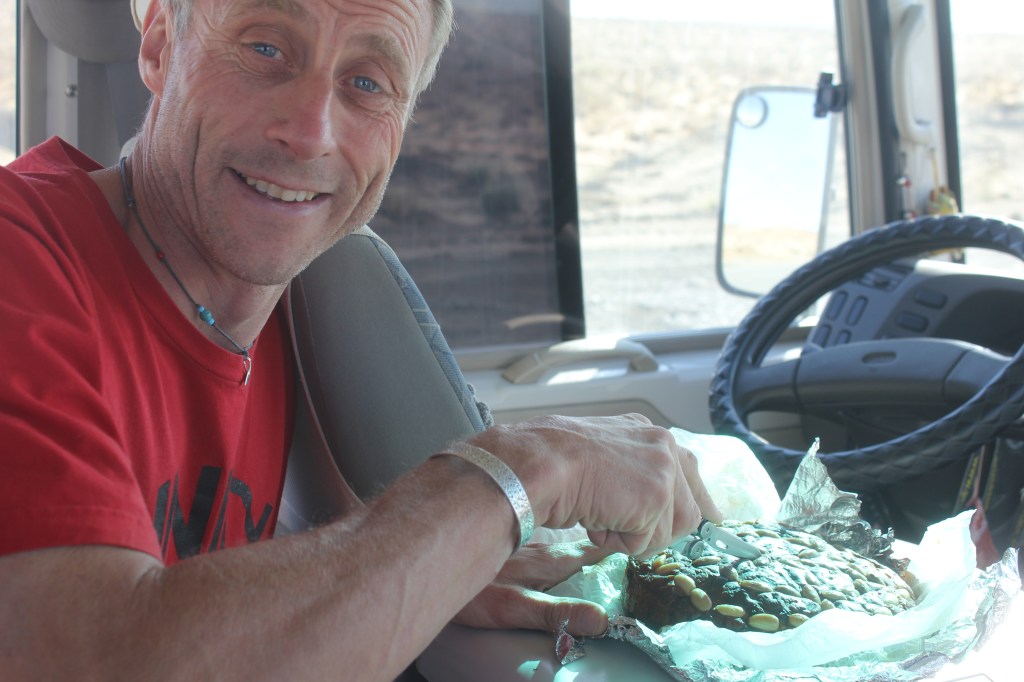
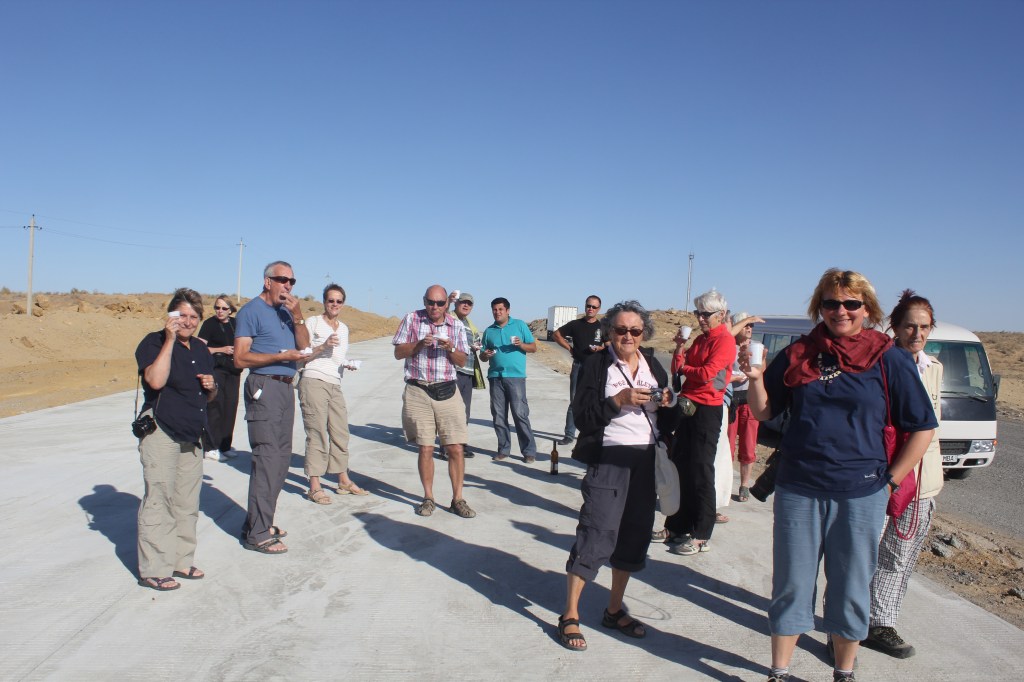
The final road journey of our Silk Road Odyssey, wouldn’t offer us the spectacular scenery of our previous travels. However the ten hour bump n’ weave across the desert promised us a glimpse of the mighty Amu Darya river, the Oxus of Greek legend. The reality however was hardly the stuff of romance; standing on a freshly laid strip of Korean tarmac squinting through desert dust at a murky grey expanse of water in the distance. In true Wild Frontiers spirit though, we managed to turn the occasion to our advantage. The whisky cake, which had travelled nearly 2700 kilometres along the Silk Road and crossed five borders, was auspiciously sliced and ceremonially consumed – along with the Uzbek muscatel.
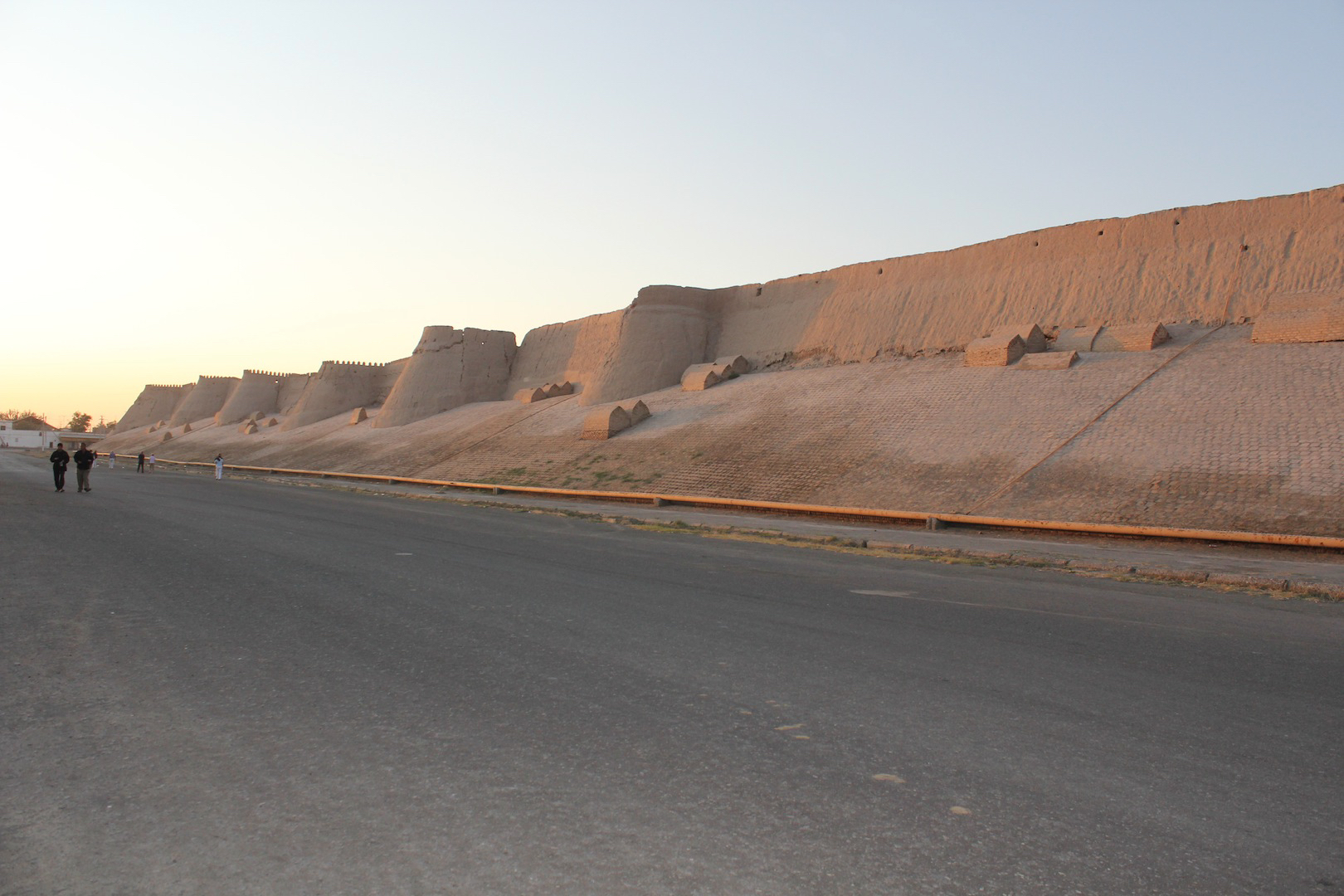
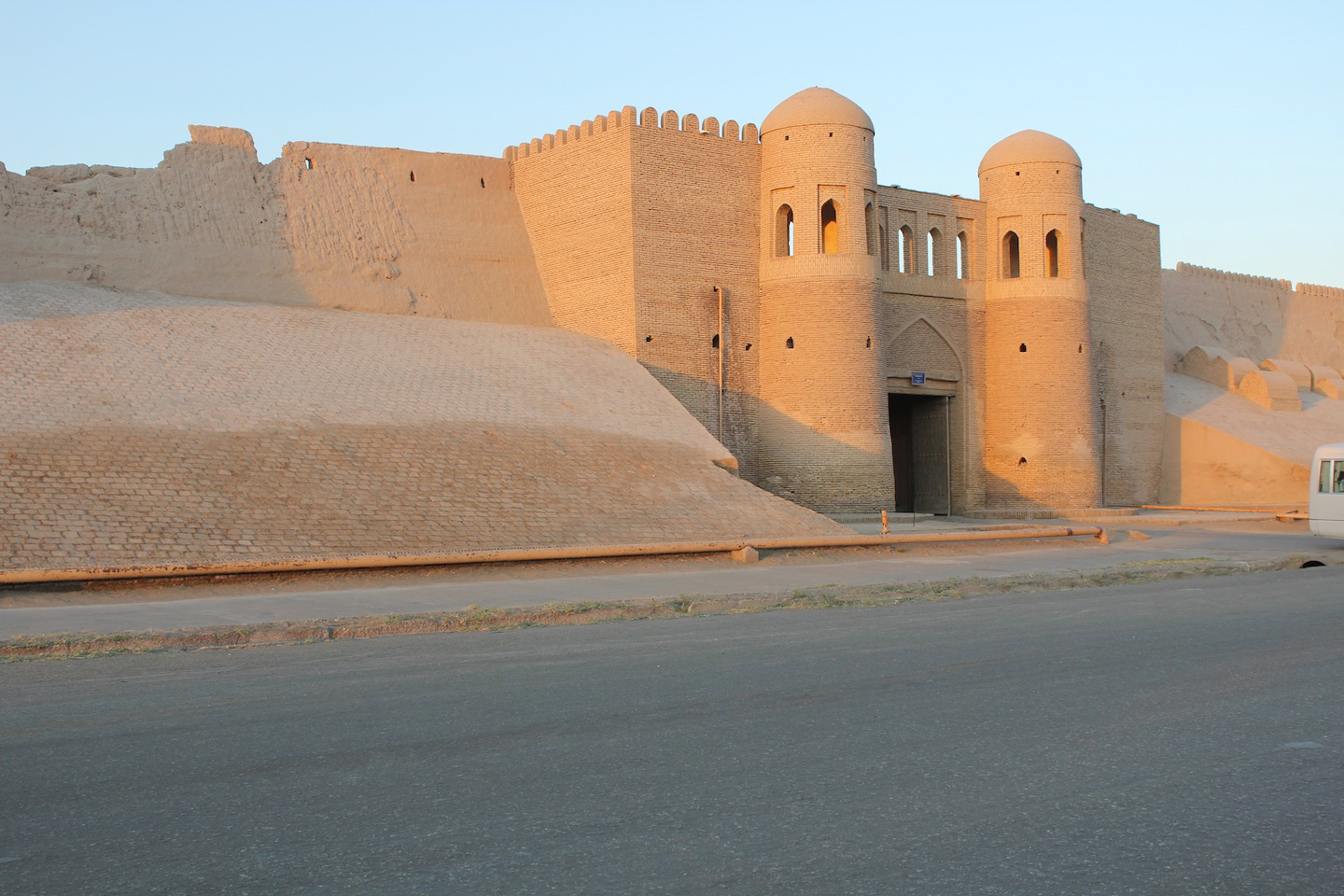
At dusk we caught sight of the darkened silhouette of the walled ‘museum city’ of Khiva. The city may not boast the mighty monuments of Samarkand, or the bustle of Bukhara, but the ancient walls have preserved a charming snapshot of time. We ambled through narrow car less pathways around the palaces, madrassas and mosques that seemed to appear at every turn. Sandy coloured exteriors hid elaborately painted wooden interiors. The calm atmosphere of these quiet streets was the perfect end to our time travelling along the Silk Road. Later tonight a flight to the capital, Tashkent, will bring our Odyssey to a close.
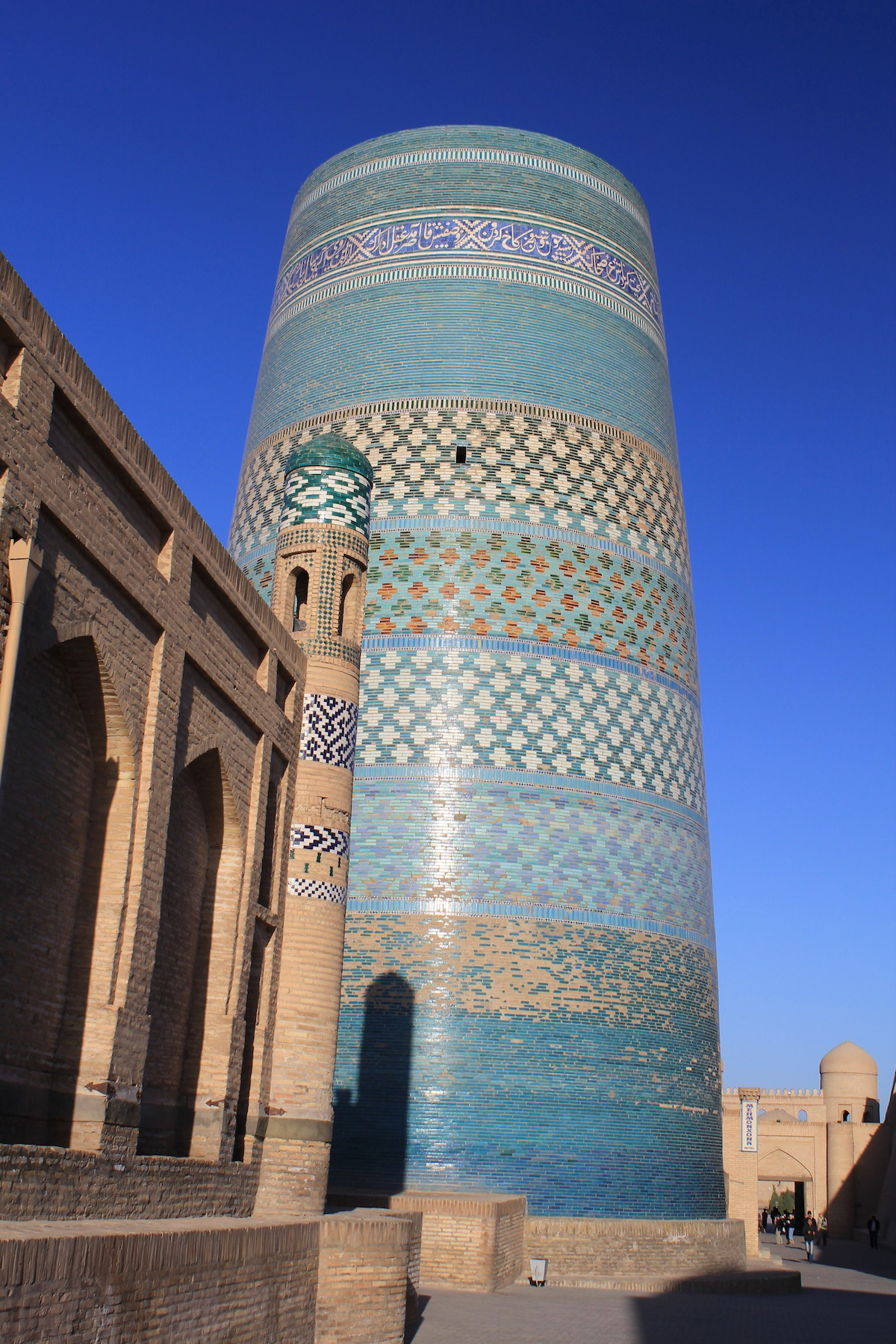

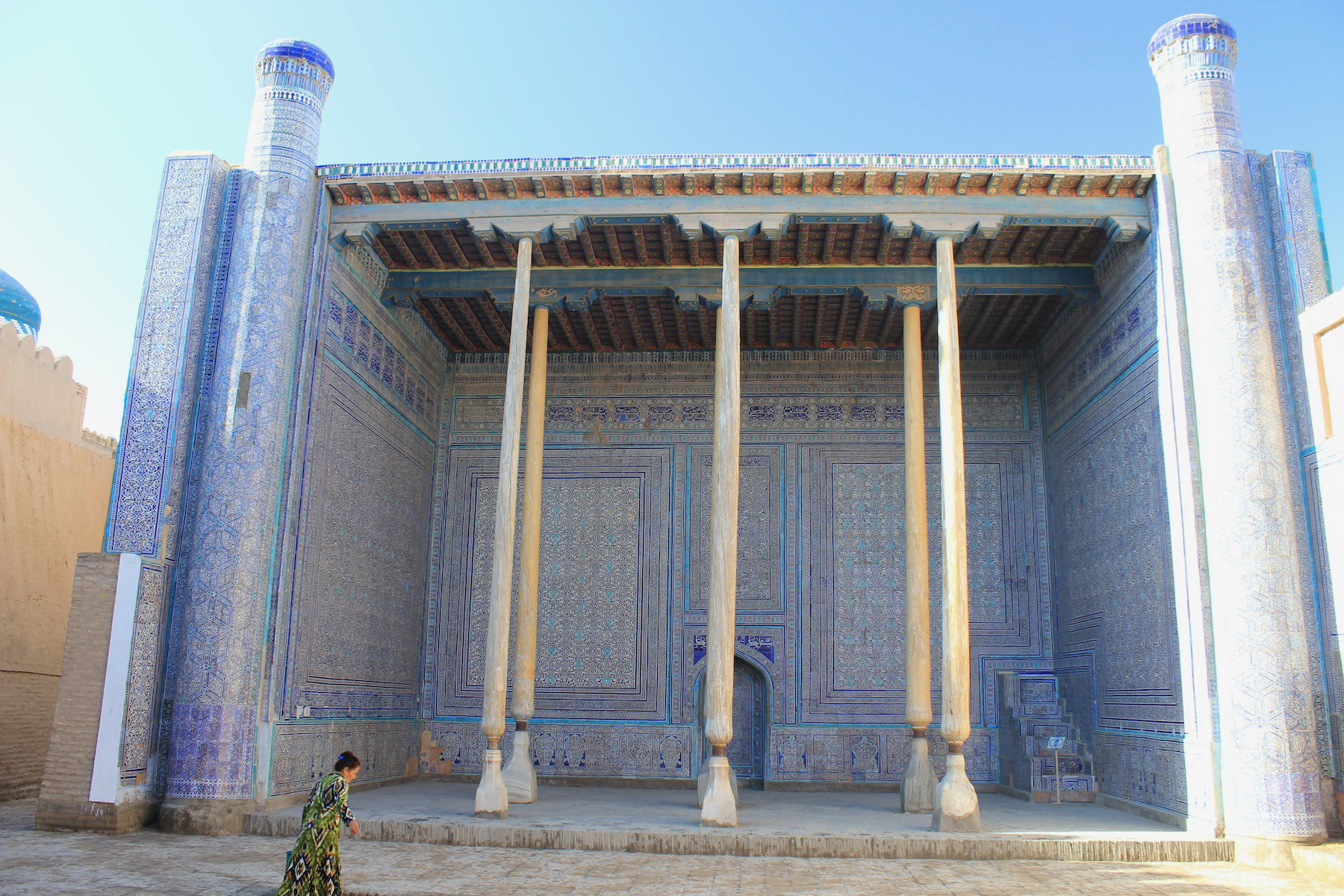


 The Lonely Chopstick