
The last blog left us preparing for ‘The Longest Day’ – a 450km, 16-hour journey from Kashgar to Osh in southern Kyrgyzstan. ‘Highlights’ included accusations of spoon robbing from the Chinese hotel at 4am, preparing breakfast on the go at 3000 metres on an unpaved road and three stunning mountain passes. The addition of a random soldier and the driver’s son to our already cramped bus frayed the nerves, as did the promise of a home cooked lunch – five hours away! Thankfully by the time we approached Osh at dusk amongst returning cattle herds, we had warmed sufficiently to be passing sweets to our uninvited guests – and reflecting on the most spectacular drive of our trip to date.
Back on the road, our third border crossing (to date) took us into Uzbekistan’s share of the spectacular, fertile Fergana Valley, part of the northern Silk Route. Along the way we learnt about pottery, silk, and enjoyed the splendid humour of the folk of Magilon town. A visit to the beautiful palace of the last Khan of Kokand and the royal tombs completed this little foray into Uzbekistan. In a few days we’ll return to admire the architecture of the rival Bukharan and Khivan Khanates – along with the splendours of the Tamerlane’s capital, Samarkand.
Another day, another border (number four and three in as many days!) The Uzbek border guards were in good humour, comparing Wayne Rooney with Shrek and cueing an impromptu rendition of ‘Yesterday’ as we waited. Uzbek customs are the most over officious I have encountered, perhaps anywhere. After completing two Russian language customs forms (carbon paper not an option here) they examined our luggage with a smile – and a fine tooth comb – before we were allowed to wander over to the somewhat sleepier Tajik side.
Here waiting handshakes and the scribbling of our details in school exercise books welcomed us to Tajikistan, the smallest and least visited state in the former Soviet sphere. Stalin’s divide and rule policy has squeezed the state into a ridiculous shape, depriving the Tajiks of of Bukhara and Samarkand. Unlike its neighbours Tajikistan’s culture has a considerable Persian influence, and a pleasant Farsi dialect is spoken.
During lunch our delightful guide, Hamrakul, informs us that his work has reduced from 30 groups last year to just six this. It’s a reminder of how the fraught political situation in the region affects the small amount of tourism that exists. The Uzbeks have closed the border on the grounds of a water dispute on the Syr Darya (Jaxartes) river, although an underlying pretext of Tajik claims to Bukhara and Samarkand has been festering since Soviet times.
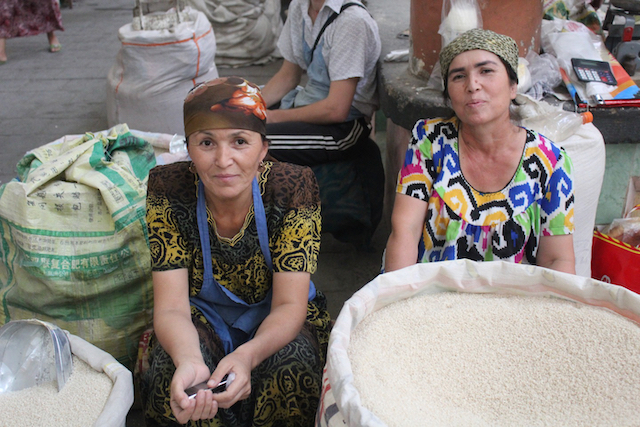
Our exploration of our host city, Khujand, began at the smart city museum, where the charming museum guide, Ainorat, linked the Tajiks nicely to their Persian heritage. Paradoxically she enthused over the arrival of Alexander of Macedonia in these parts – certainly not a view shared in Iran! In the towns market, another claimant to central Asia’s biggest bazaar crown, I met Khoshed. My latest friend showed me around the market, introducing me to his friends along the way before insisting on having his photo taken with us. He also told me of his love of Elton John and Big Ben, which I tried my best to share, somewhat unconvincingly.
Tomorrow we plan to head out through the Fergana valley to the spectacular Sharistan pass.
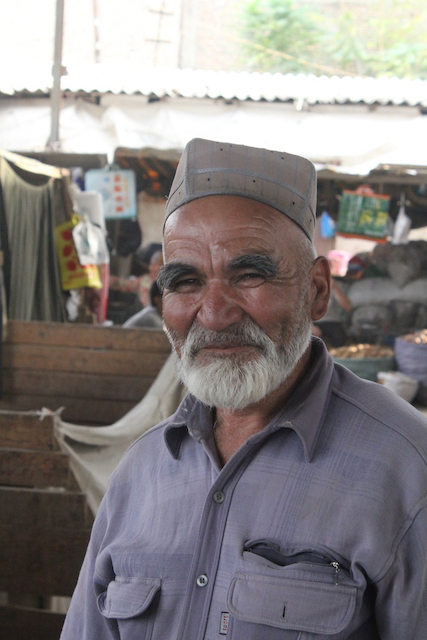
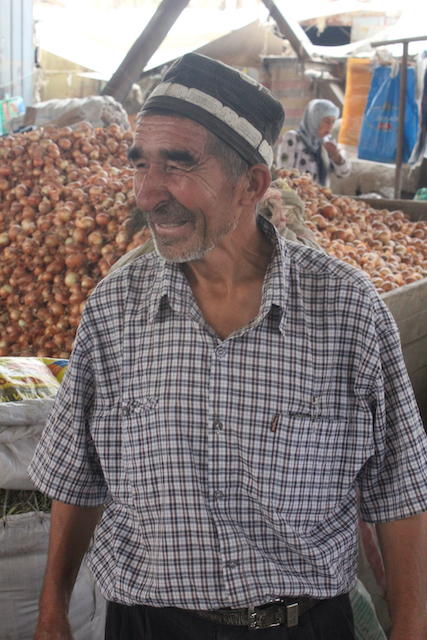
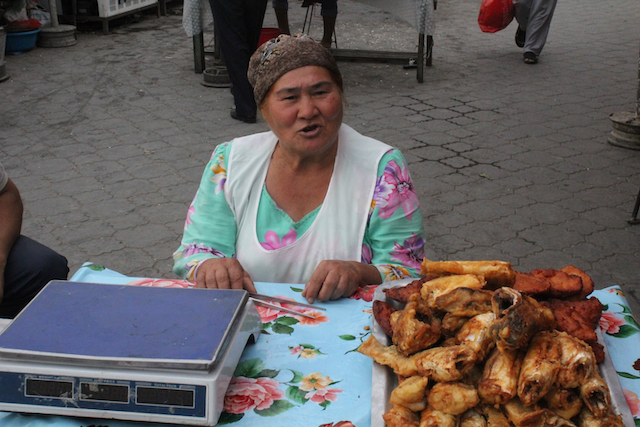
The fine folk of Istaravshan (Tajikistan)
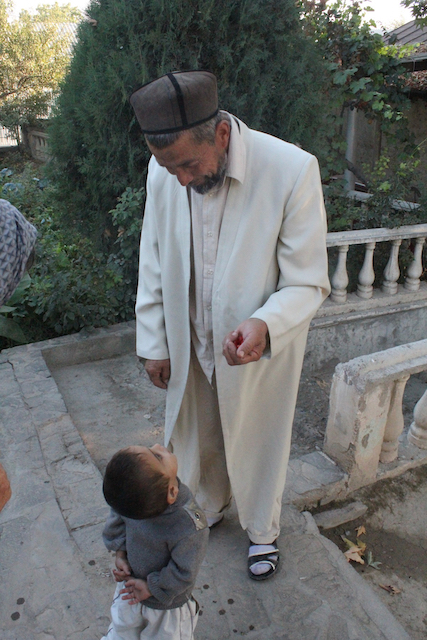
In contrast to the structural splendours of famous Silk Road destinations, a small town in the foothills of the Turkestan hills would leave us with wonderful memories of our brief foray into Tajikistan. Istaravshan was established during Sogdian times, predating the Silk Route, and was eventually overrun by the rampaging Macedonians in the 4th Century BC. The towns current inhabitants would show a far more hospitable welcome to their latest European visitors.
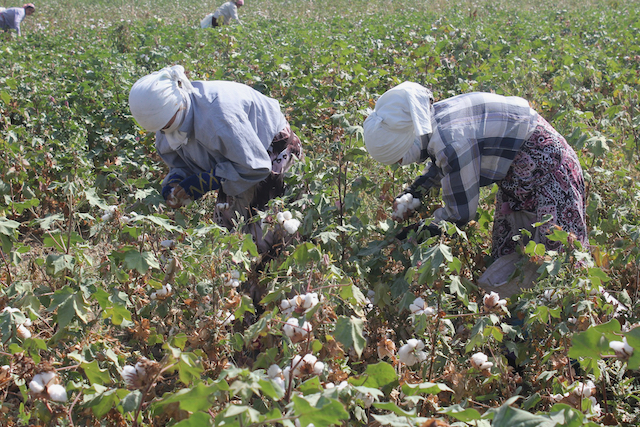
We left Khodjent on the Chinese built road through the mouth of the Fergana valley. The flat plain brings the valley’s produce to the roadside – onions, peaches, tomatoes, grapes, pumpkins and the ubiquitous giant watermelons that have seemingly followed us along our journey from Bishkek. Entering the Sharistan Valley we stopped to help women collect cotton in the fields. A hundred kilos of the lightweight ‘white gold’ earns workers a backbreaking eight dollars a day. Unsurprisingly Tajikistan is the poorest of the former Soviet states with real unemployment more than 50% and half the GDP coming from overseas remittances from migrating Tajiks.
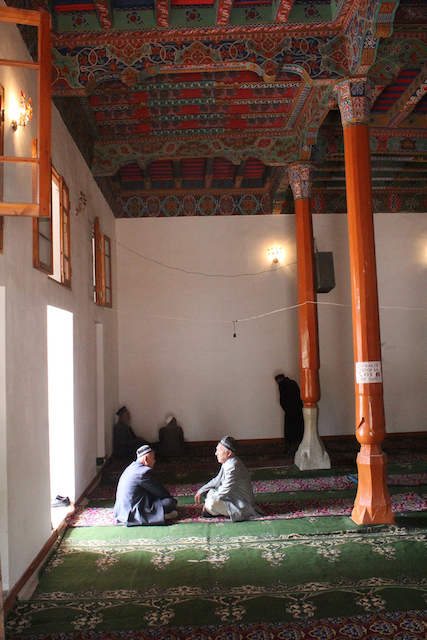
An hour later we stopped by Istaravshan’s main mosque. Being Friday, We watched as the cloaked and bearded men folk, greeted each other and joined the debating that traditionally precedes Friday prayers. We continued to climb the hills to our lunch spot just below the Sharistan pass. As we were leaving a policeman held my hand for several minutes as he wished us a safe and enjoyable trip in Tajikistan – as well as delivering some choice words about former US presidents! The weather prevented us from continuing up to the pass so I decided to brighten our disappointment by returning to Istaravshan to explore a little further. It turned out to be a inspired decision, aided by the Lonely Planet (I don’t usually credit them!) which unlocked some fabulous doors amid the mud brick back streets of Istaravshan.

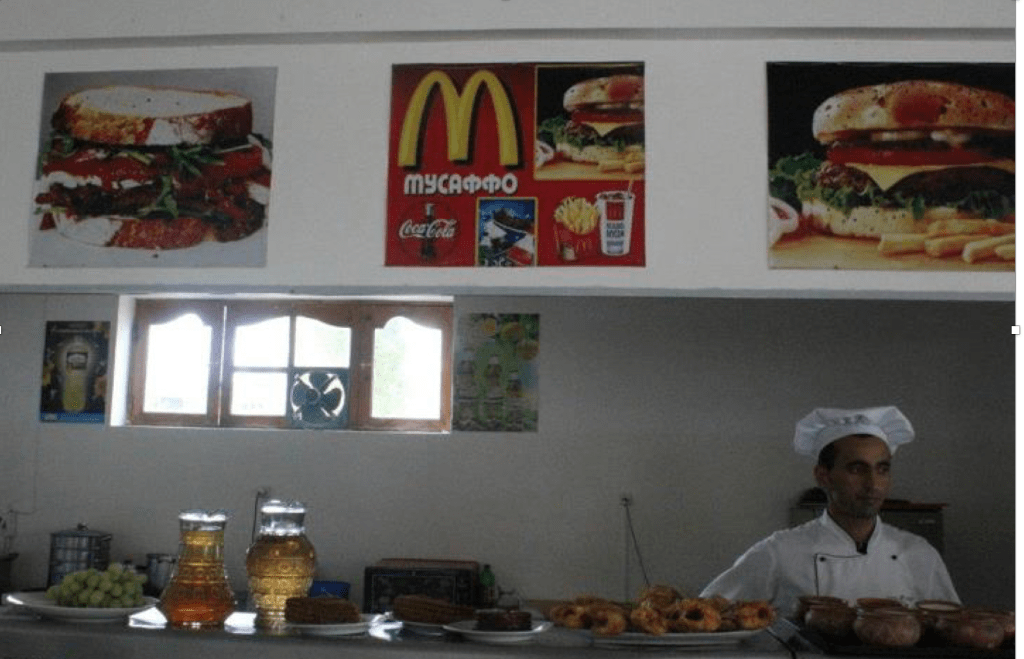
We started with the turquoise domed Abdul Latif Madrassah dating from Timurid times, built by the descendents of Tamerlane. From here local kids on bikes and foot eagerly pointed the way through narrow adobe streets to the Hauz I Sangin Mosque, with it’s colourfully decorated wooden porch and rose garden around a hauz, pond. Just as the sun was making its way down and we had started to wander away, the call to prayer was devotedly recited by the one person left in the mosque.
The four tin copulas of the Mazar I Chor Gumbaz mosque took some finding, but what was intended as a quick photo stop developed into a series of special encounters to close the afternoon. Tucked away down a mud alley we found the four-domes of the tiny mosque each dedicated to the first four Sunni Caliphs – Abu Bakr, Umar, Uthman and Ali. The local Iman, Abdul Karin Khan, welcomed us warmly and told us his family history – pointing to the tomb of his great grandfather who built the mosque. He asked that we gather in the mosque facing Mecca – it was just about big enough for the group – while he recited a blessing from the Koran. His wife tore sacred bread for us as we were preparing our goodbyes.
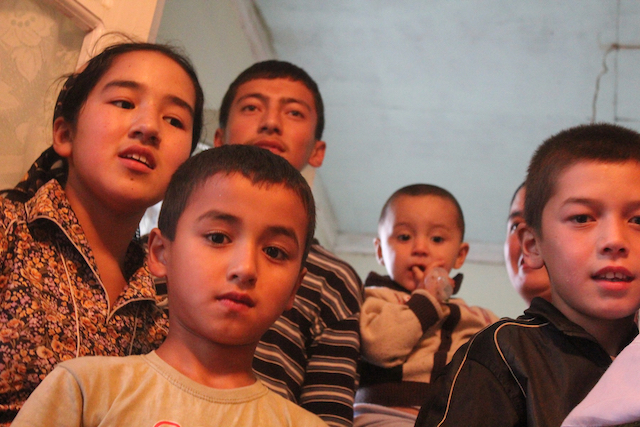
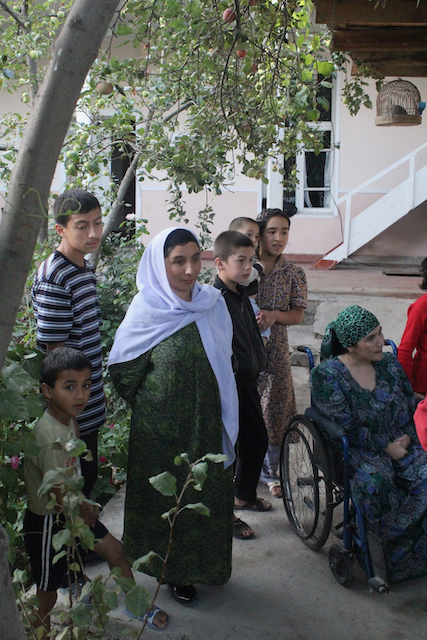
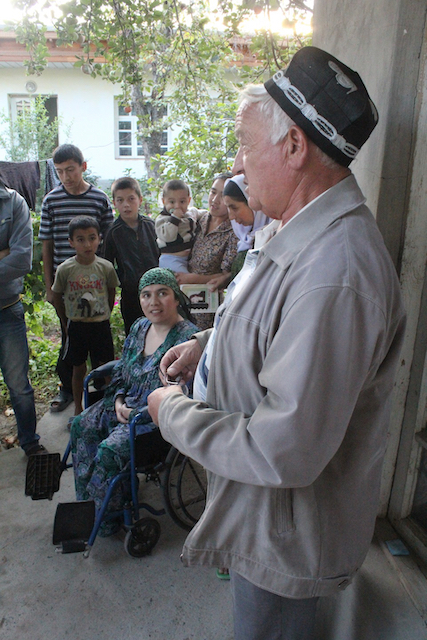
Before we could leave we were beckoned into a neighbours garden to meet a local poetess. Sayora, wheelchair bound and smiling, showed us her poetry books before reciting wonderful verses about nature, trees and all things eventually returning to Gods earth. A special encounter. Again we attempted our goodbyes – only to be lured back by trays of nuts and sweets into Sayora’s sister’s home for tea. Nazira ushered us into a cosy room decorated with beautiful carpets and traditional wall hangings. We sat on the floor, around the teapot as she passed around photos of her late parents. The neighbourhood children had gathered in quizzically in the doorway and listened as we introduced ourselves and answered questions about our jobs. Smiles, giggles and laughter filled the room as our guide, Hamrakul gently translated. A couple of hours later than planned, we finally managed to embrace, shake hands and wish this friendly neighbourhood a fond farewell.

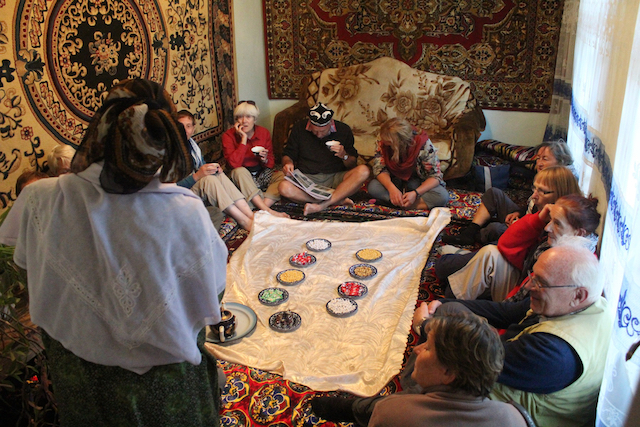
I’m continually humbled on my travels by how warmth, hospitality and laughter transcend cultures and languages. Similarly, how this generosity, warmth and hospitality often seem inversely proportionate to wealth.. Hopefully Tajikistans’ spats with their Uzbek neighbours will soon be resolved, bringing more visitors to this uber friendly, but sadly impoverished land.
 The Lonely Chopstick