
‘I came here for the energy of the islands’ explains Dr Ahmad Nadalian, one of Iran’s leading environmental artists. Ahmad’s sand art – designing seals and rolling them out on beaches to form patterns – was another unexpected discovery. Qeshm Island – like Hormuz – was about to unlock more Persian Gulf magic.
It hadn’t started well; barely an hour after the ferry departed Hormuz, we were already lamenting that mystical energy of the ‘Rainbow Island’. Our destination, Qeshm Island is over 80 miles long – and bigger than 25 countries. Qeshm Town has beachside high-rise hotels and direct flights to Tehran. No tuk-tuks chugging along coloured dirt tracks here; instead a private taxi sped us along a straight tarmac road to Salakh village.
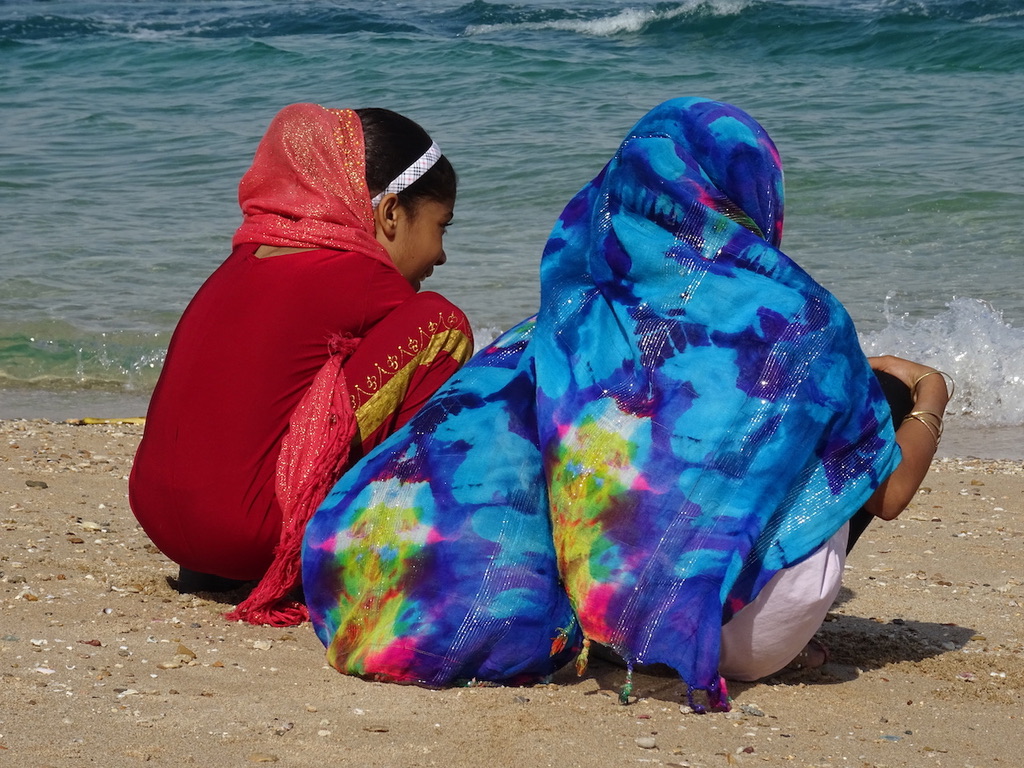
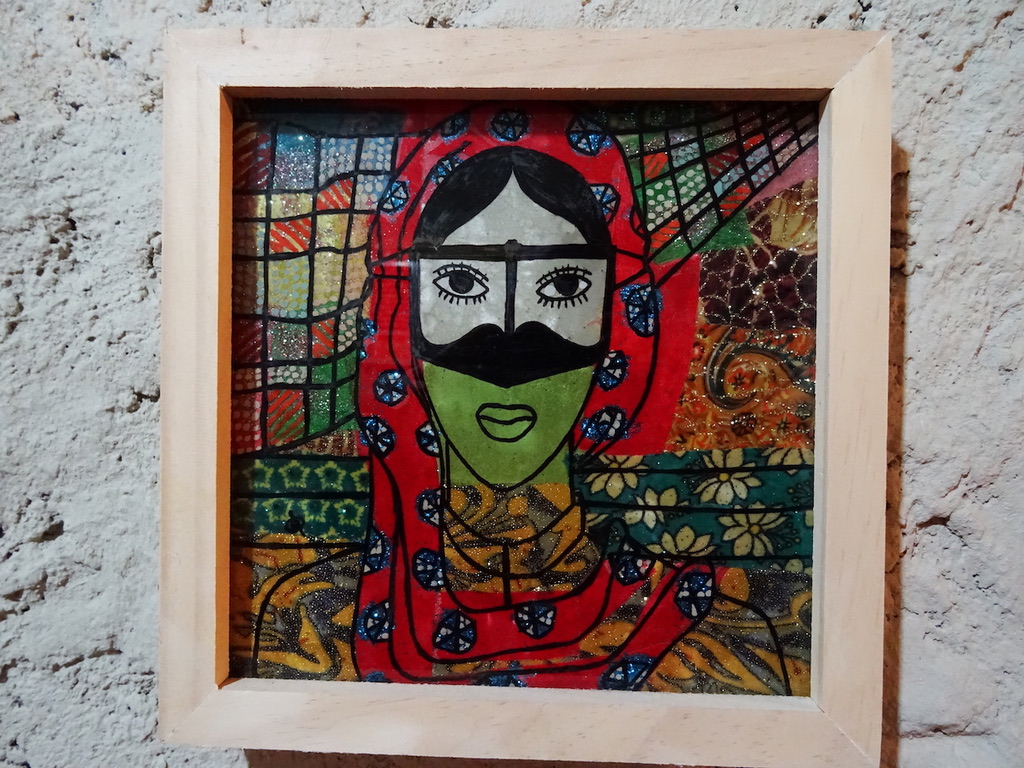
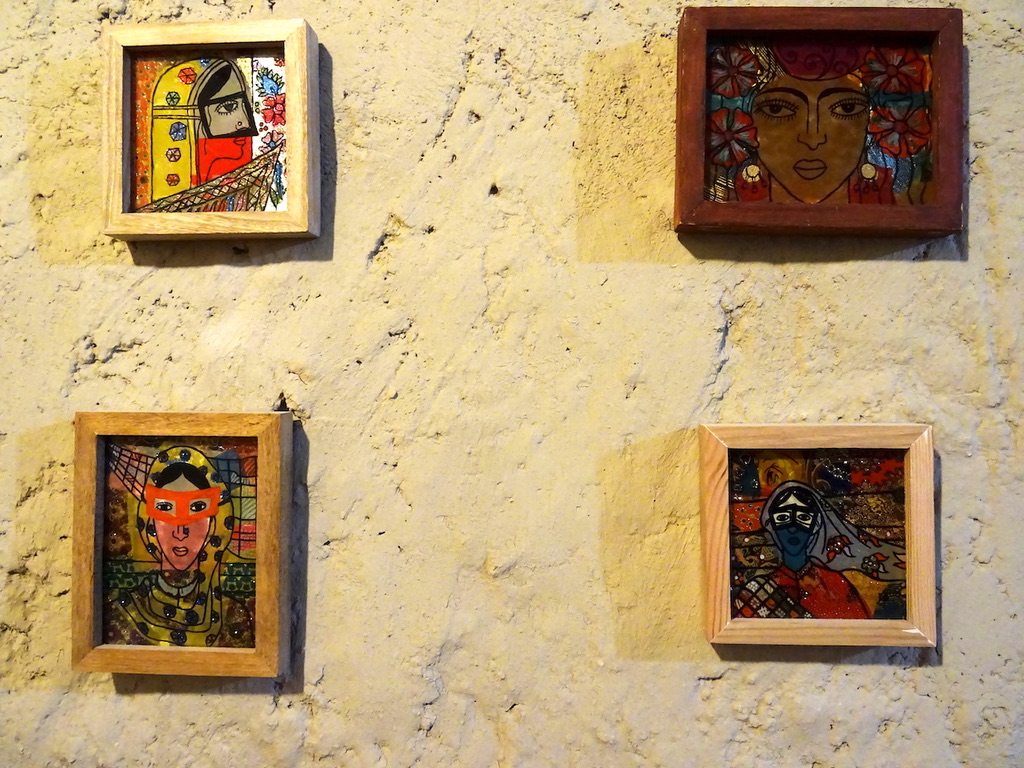
Reassuringly, the quant coastal village provided the same cosy homestay hospitality that we had experienced on Hormuz. At sunset I wandered along to Dr Ahmad’s Paradise Art Center with my good friend and fixer Amin. I recalled how, in his brightly decorated workshop on Hormuz island, Ahmad had explained how he engages Qeshm island’s women and girls to paint with the coloured sands of the island and recycle discarded scarves into art.
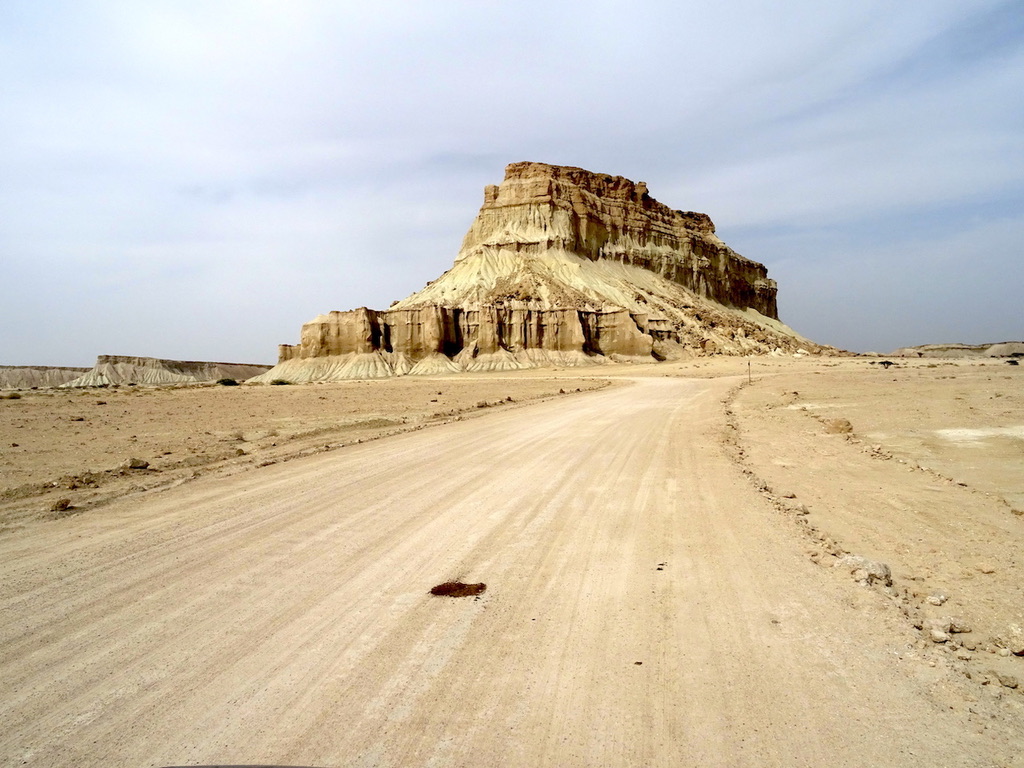
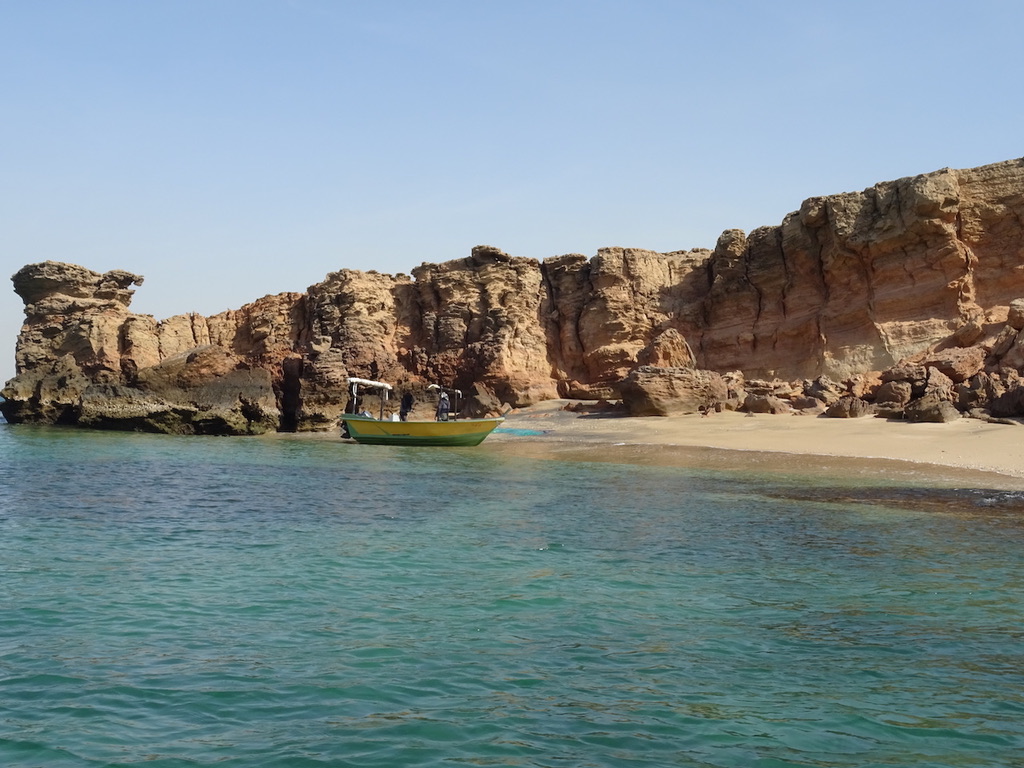
Qeshm is an extension of the Zagros Mountain range that hugs Iran’s eastern borders with Turkey and Irag before plunging deep into the Persian Gulf. The last 25 million years of tectonic activity gifted the island stunning geological features, a lunar-esque landscape – and the world’s longest salt cave.
Salt crystals and coloured minerals sparkle as our flashlights flicker inside Namakdan Cave, as we started our island exploration.
The cave twists 6km’s deep into the mountains, unearthing a subterranean, saline wonderland of lakes and rivers. Elsewhere the island’s maze of caves have unearthed rock carvings suggesting they functioned as pre-Islamic religious sites. At Chahkooh Canyon fierce sunlight charged a glowing twisted rock stratum, weathered by time and reminiscent of Petra’s Siq entrance (minus the concrete floor). The canyon’s ability to hold what little rain fell made it sacred to Quesm’s ancient inhabitants.
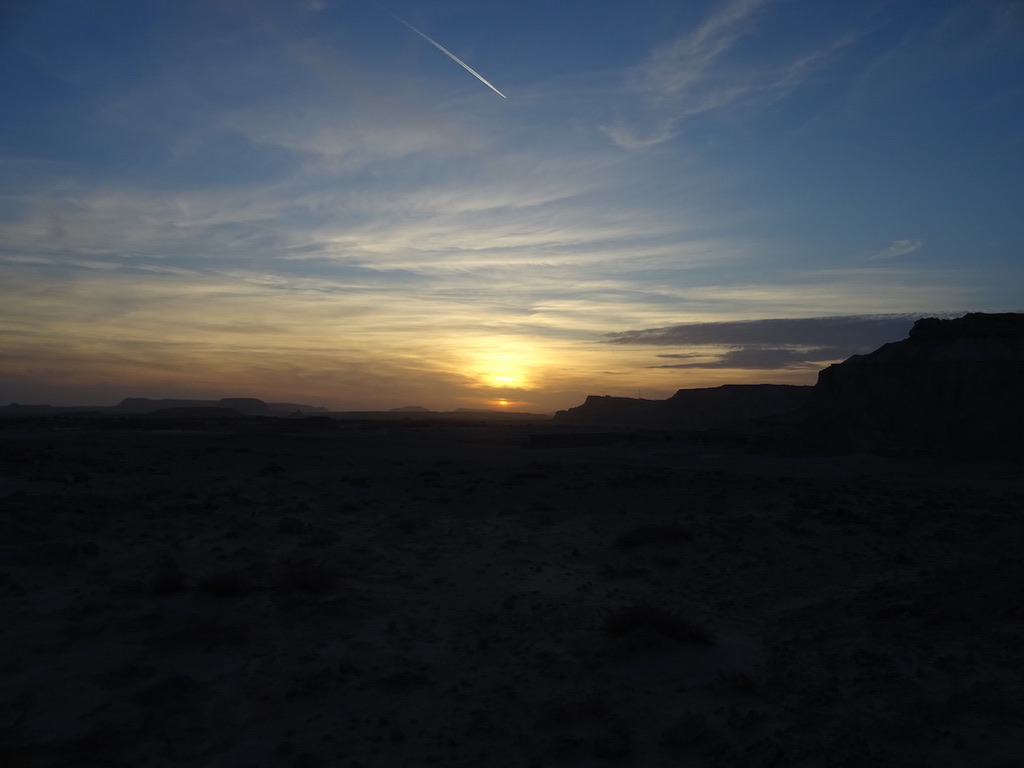
At sunset we wandered into the vast rock wilderness of the ‘Stars Valley’. I clambered through an eerie labyrinth of mountains, canyons and moonlike plateaus – hypnotically drawn towards the spectacular sunset on the horizon. As the sun slipped through the last golden strip of clouds, I sat down to absorb the beauty and deathly silence across the spectacular valley. Suddenly, seemingly from nowhere, the haunting sound of the call to prayer echoed around the canyon from a village somewhere far on the horizon.
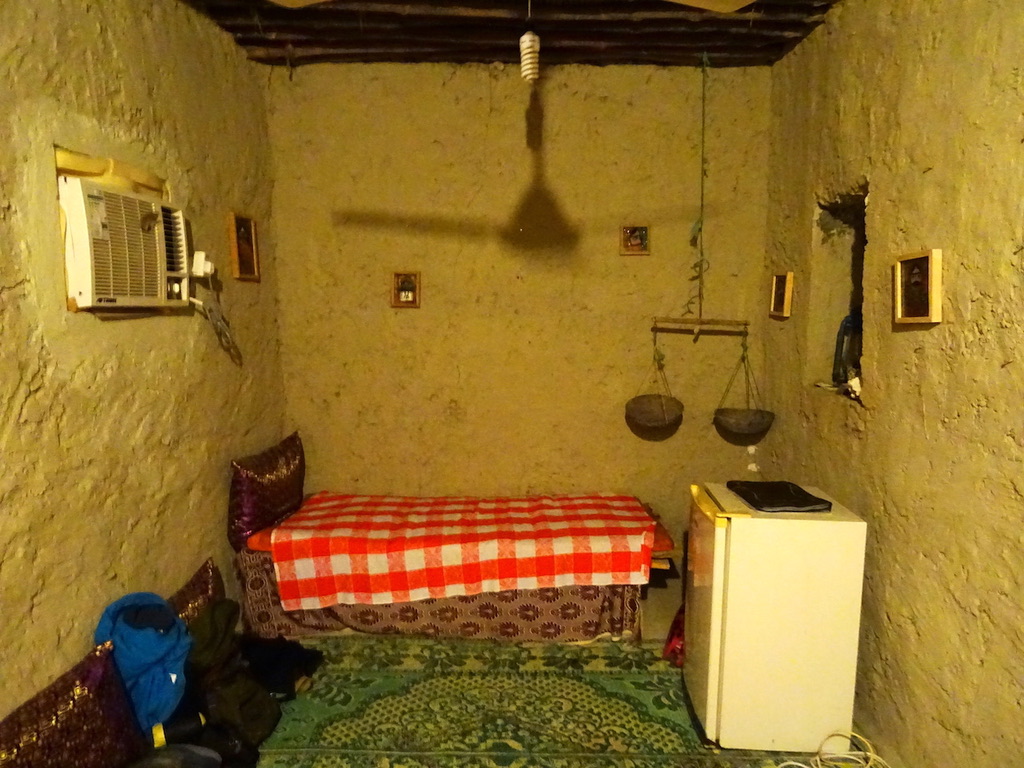
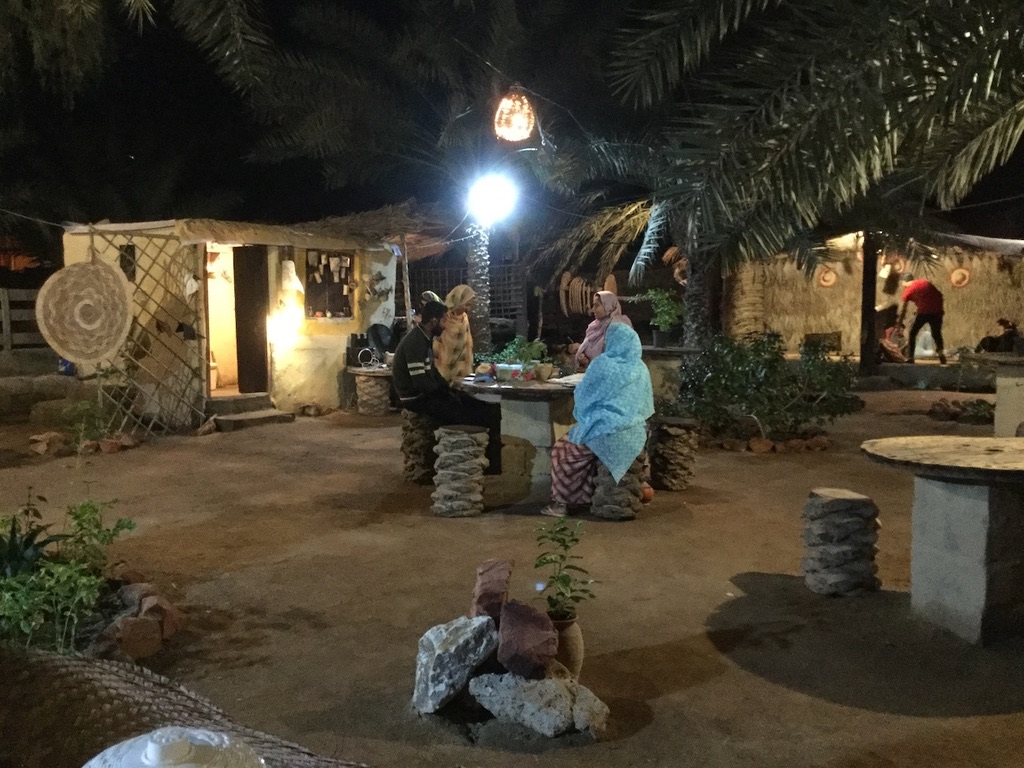
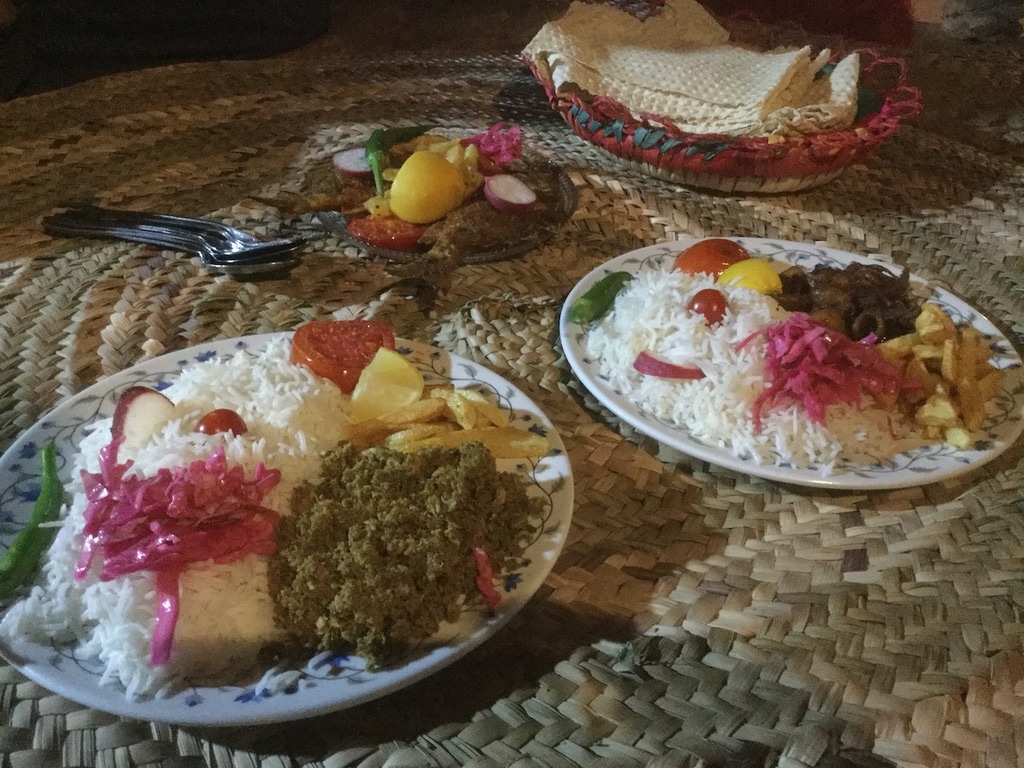
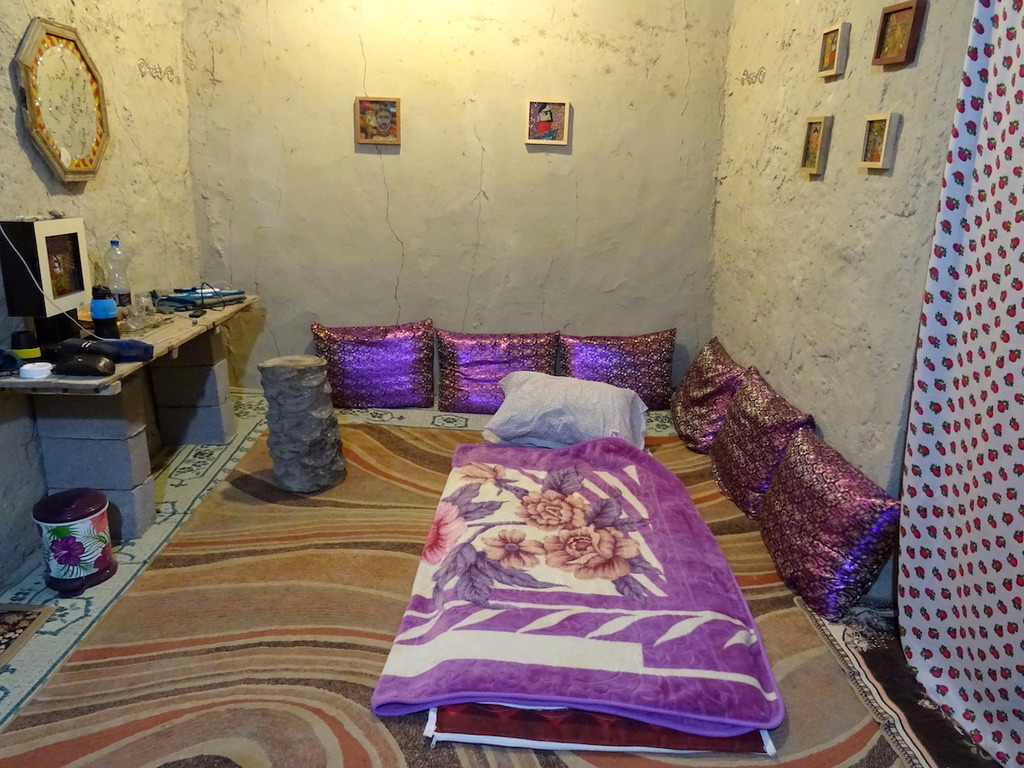
The cosy homestay made for a welcome shelter from the heat. Our host, Nasreen, served scrumptious offerings from the sea in the shade of the garden’s lofty date palms. Food was served on ‘takhts’ – square Persian day beds – followed by saffron tea and home-made biscuits. The soft mattress on the floor of a cool mud brick room, adorned with Dr. Ahmad’s art, made for a sound night’s sleep.
There was still more exploring to do. The calm shallow waters that lap the tangled roots of the Harra mangrove forest provide perfect shelter for a 3000-year-old tradition of island boatbuilding. During the trade eras of silk and spice, sturdy 30-metre-long teak and oak Lenjes sailed to India, China and Africa. Nowadays these imposing ocean-going structures are rapidly becoming built with modern materials, and UNESCO has placed the art of lenj building on their list of traditions in urgent need of safeguarding.
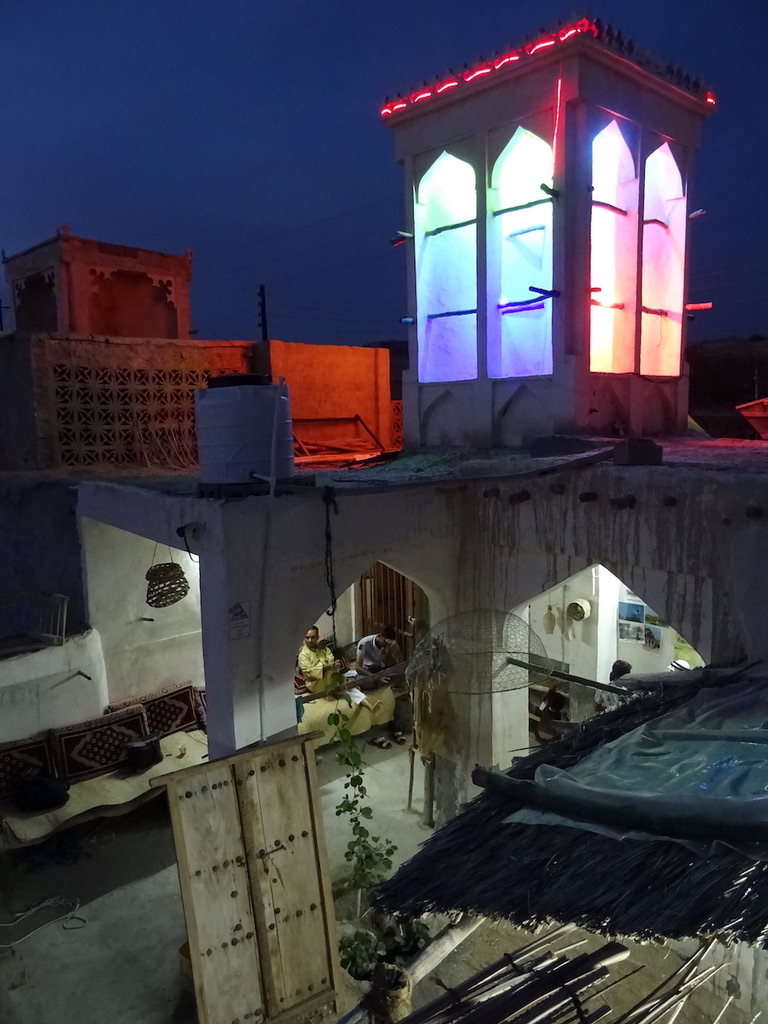
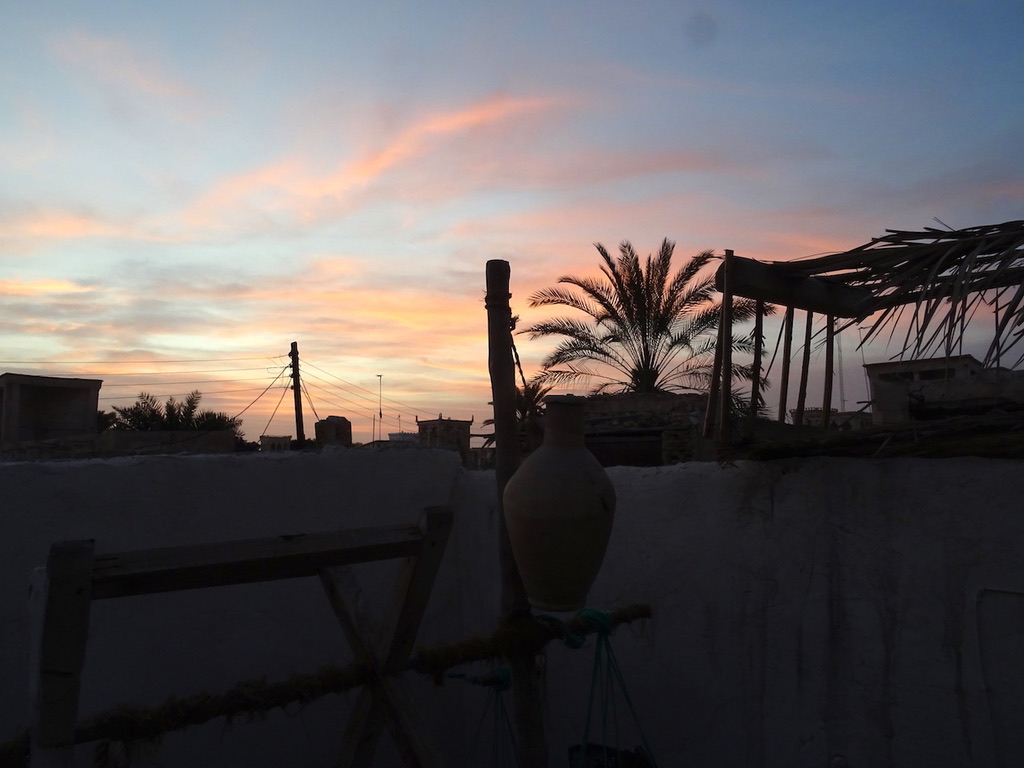
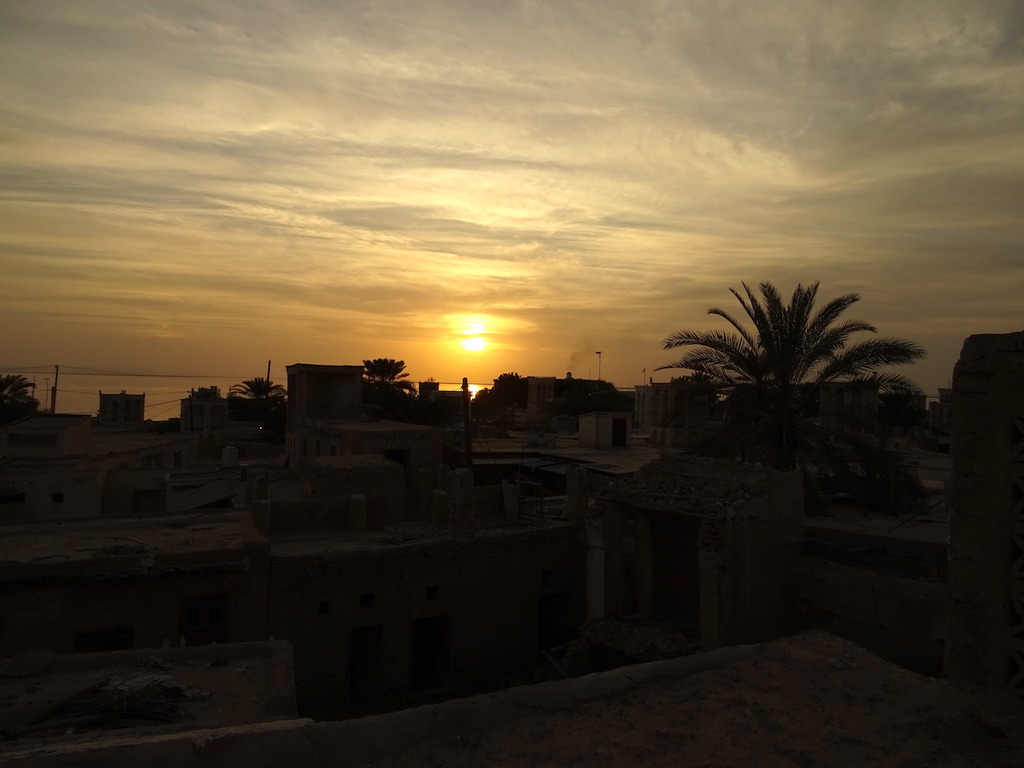
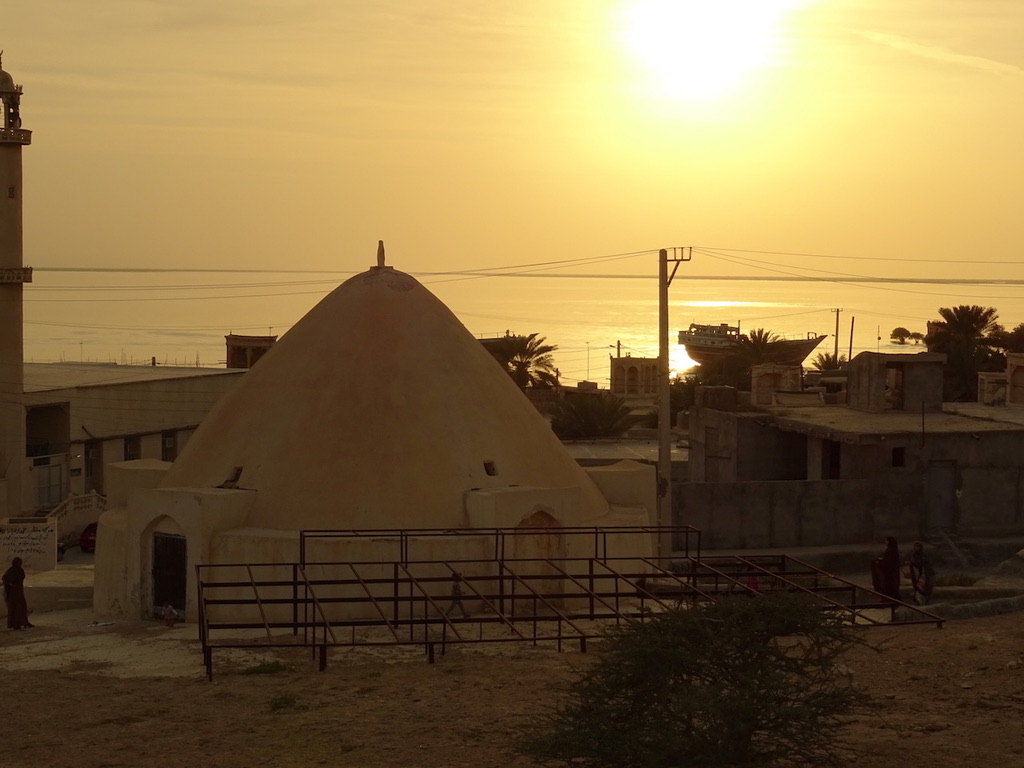
The traditional fishing village of Laft proved the perfect spot to watch the sun set on our island adventures. Narrow alleys separated terraces of mud brick houses just back from the glistening waters of the Gulf. Above our heads the skyline was dotted with badgirs, traditional ‘wind catchers’. This ancient ingenuity still cools Iranian houses today; wind is drawn into the tower, cooled by internal pools and circulates through the house. We sat beside a brick domed ab anbar, a traditional Persian water cistern, watching calm ocean beyond the silhouettes of the wind towers. The call to prayer reverberated through the alleys as the sun dipped on this seemingly ancient scene – as it has done for millennia.
Re-boarding the ferry back to the Iranian mainland, the iconic symbols of the regime – Khomeini and Khamenei – once again frowned down on us from a billboard. I smiled – recalling the sunsets, beaches, art, food and cultures of the islands. Nowhere I’ve travelled in Iran does the revolution feel more juxtaposed upon tradition.






 The Lonely Chopstick