
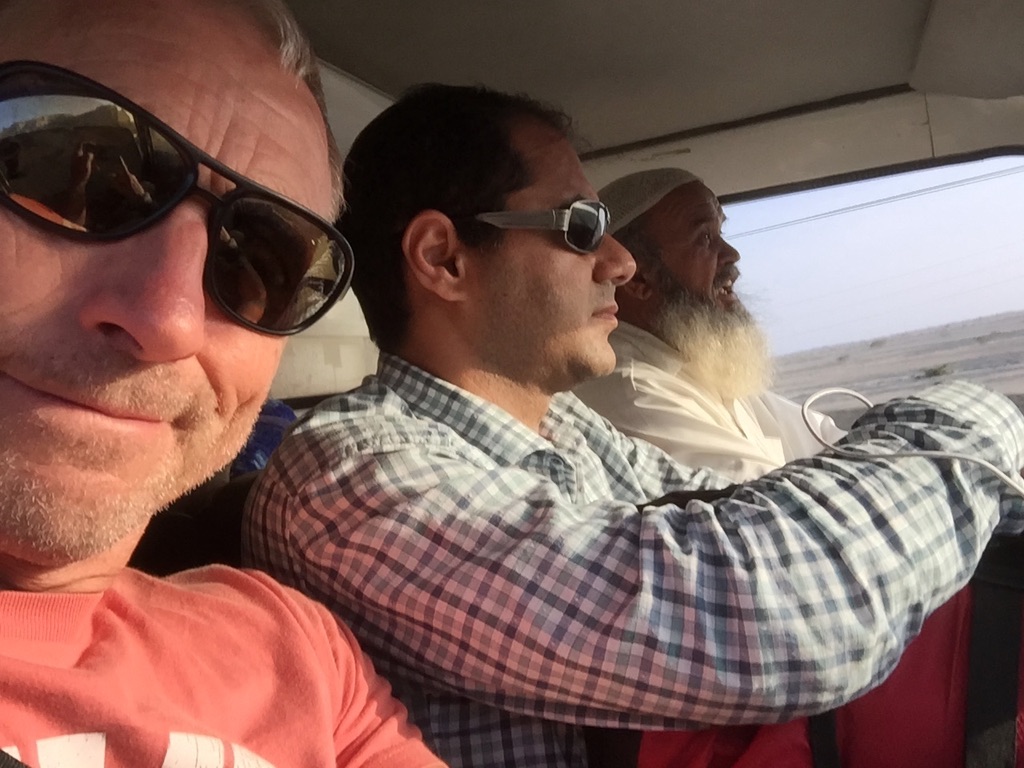
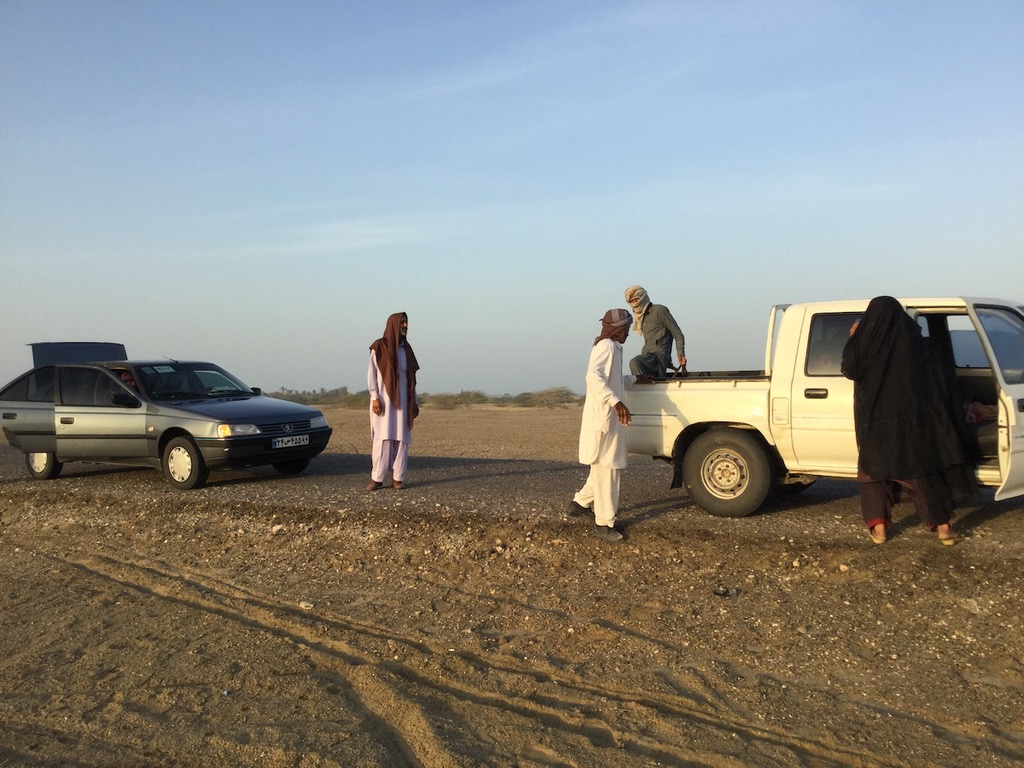
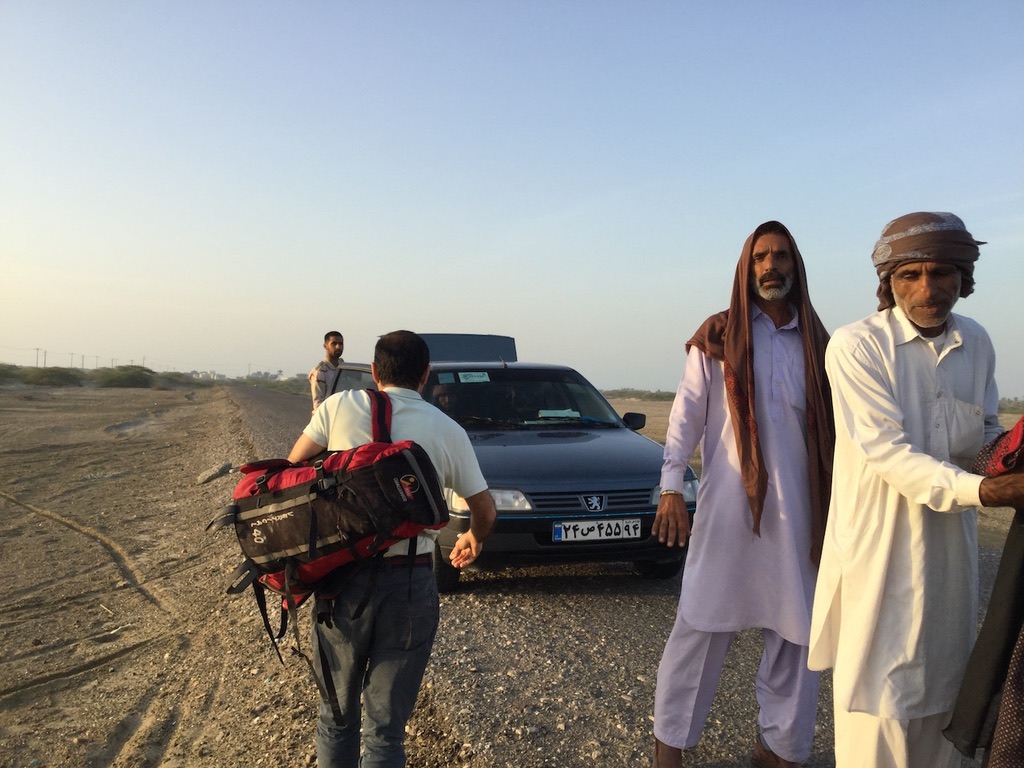
The blue pick-up zig zags through a cloud of sand towards us. A deep orange desert sun finally clears the wintery mist that clings to the horizon. We’ve just spent a cosy night in a fisherman’s hut beside the Persian Gulf. My good friend and fixer, Amin, has already secured our second ride of the day. Transferring our packs into the back of another truck out on the desert road we’re heading west for Bandar Abbas and the islands of the Persian Gulf. I’m relishing this old school travel adventure – creating our own personal experiences along the way and letting things unfold organically – without prompts from Lonely Planet or Wiki Travel.
Nothing is fixed with these journeys; although when the dawn truck to return us to the main road hadn’t arrived, our concern levels started to rise. Iranians are hardly Swiss when it comes to timing, but it was well past 6am when the trusty Zamyad truck finally showed up. Settled in the warmth of the cab we noticed the clock -0515. Amin realised our error; the driver doesn’t use daylight saving. ‘For him,’ Amin explains ‘the time is fixed – winter and summer’. In Iranian Baluchistan people do things their own way. The desert has its own rules. Rules determined by tradition and nature – rather than politicians.
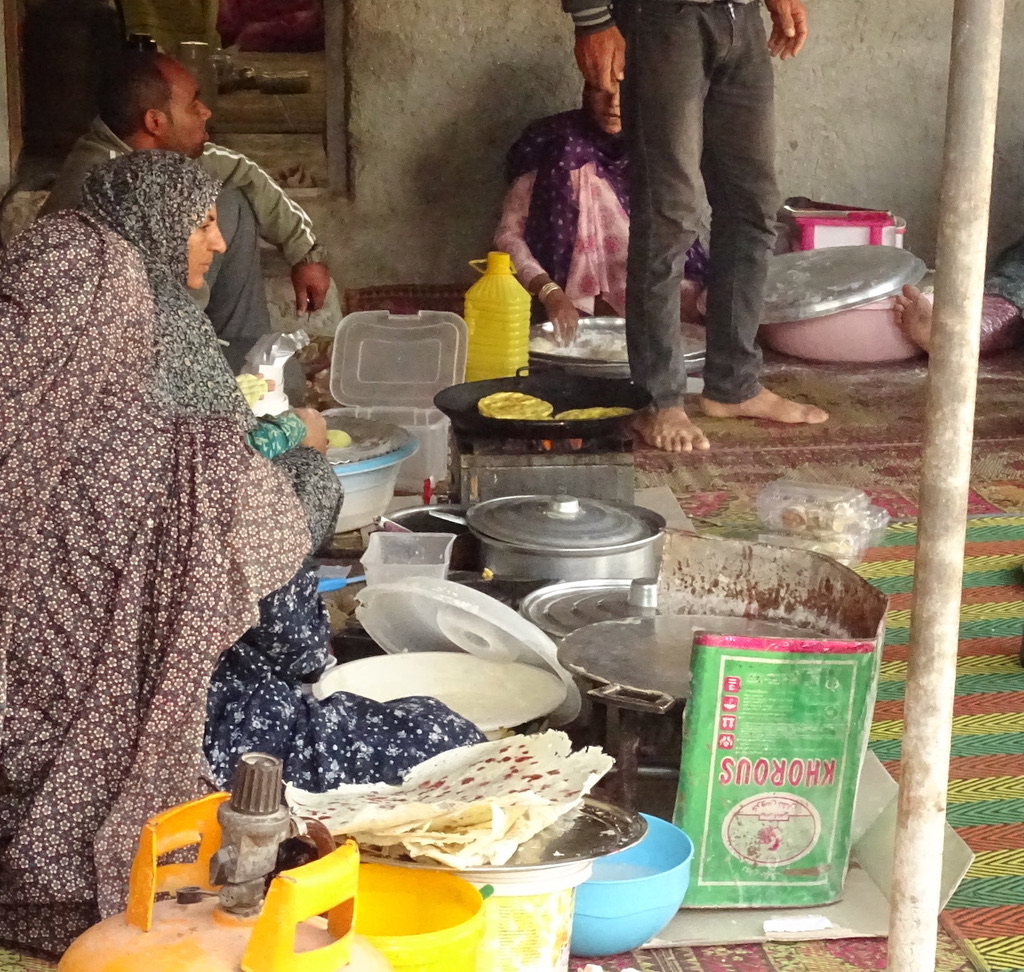
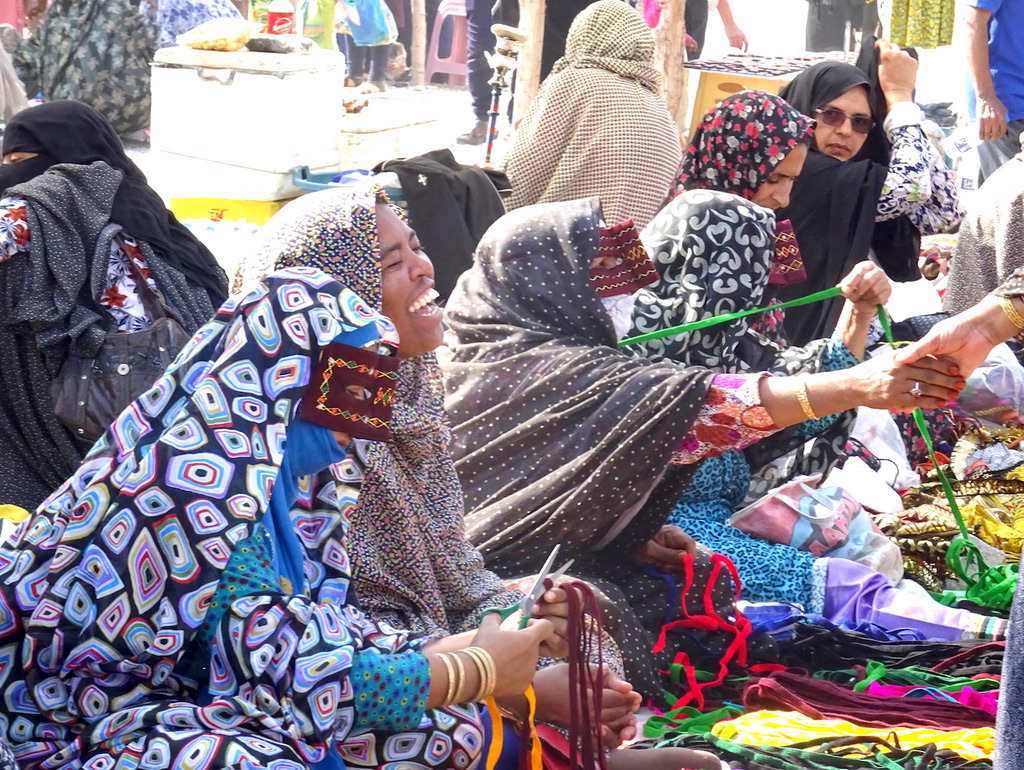
In the back of our truck a group of Bandari (port) ladies huddled together to keep warm. I could just make out curious eyes peering through boregheh, elaborate face masks worn by the women of the Gulf region. Despite these conservative coverings, Bandari clothes are bright and elaborately decorated, flowery saree style dresses draped over richly embroidered leggings. Some say their masks originated from the Portuguese settlers whose women used them as protection from the harsh climate. Others say the local women wanted to hide themselves from slave masters looking for wives.
Symbolically, as we crossed into Hormozgon province from Baluchistan the road surface improved dramatically. We’d left the neglected outpost of Baluchistan and were heading towards Bandar Abbas, once a 16th century Portuguese trading station, now a strategically crucial port city where the Straits of Hormuz narrow to a width of little over 20 miles. Through this tiny gap one fifth of the world’s oil passes.
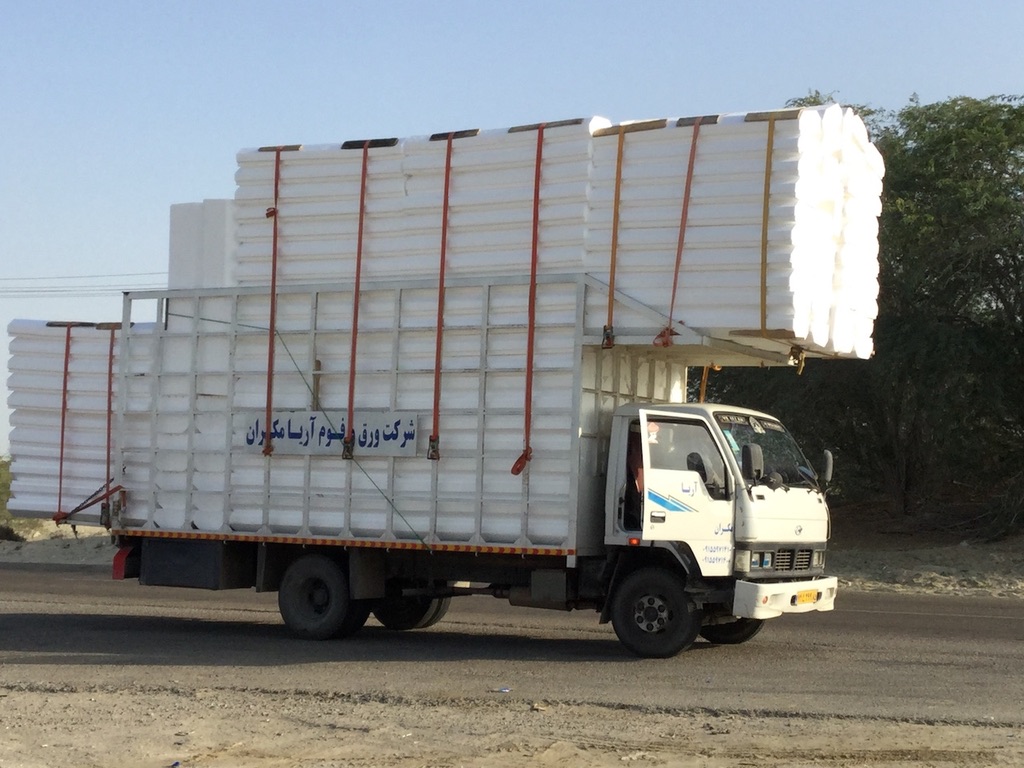
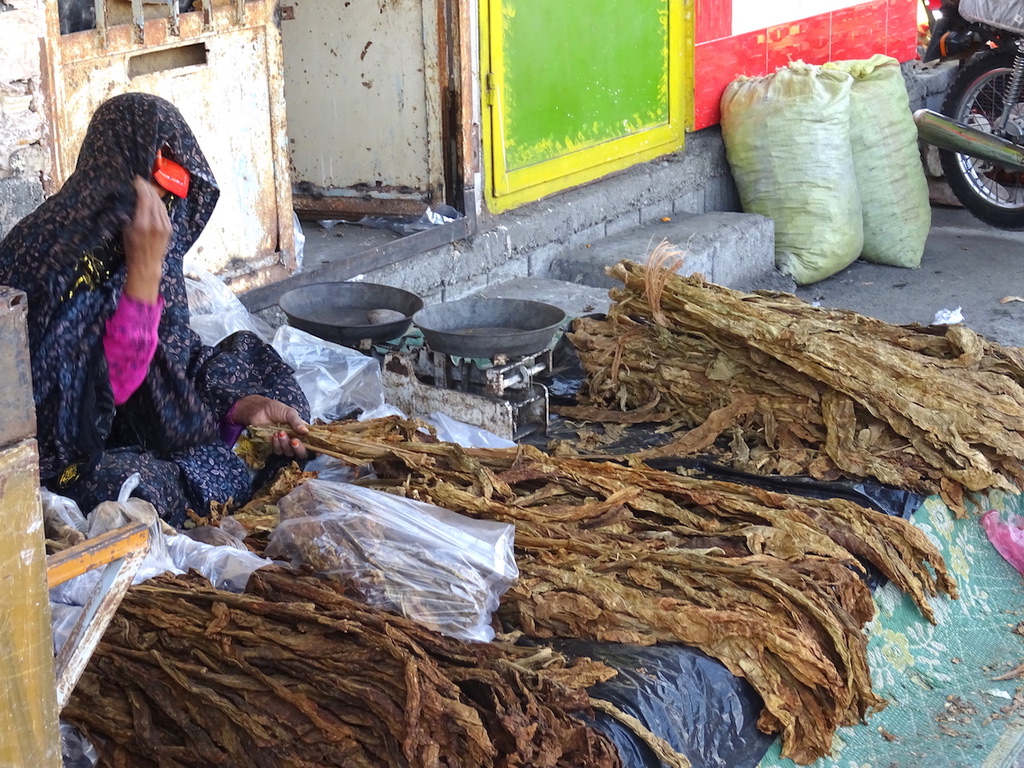
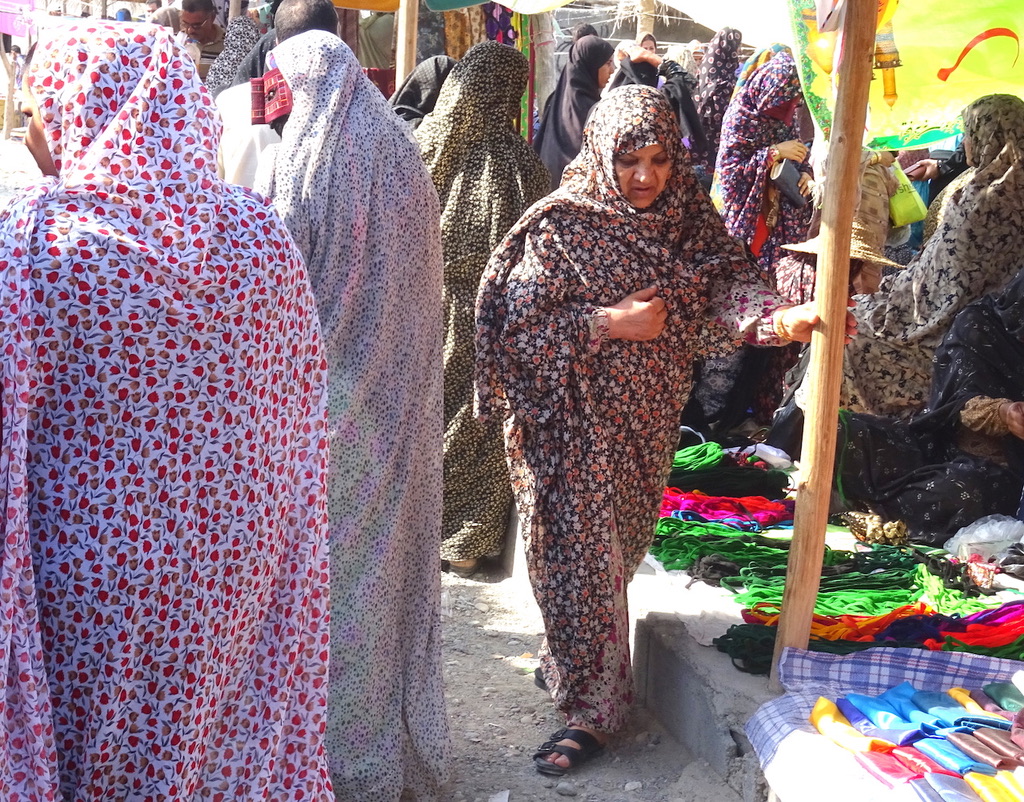
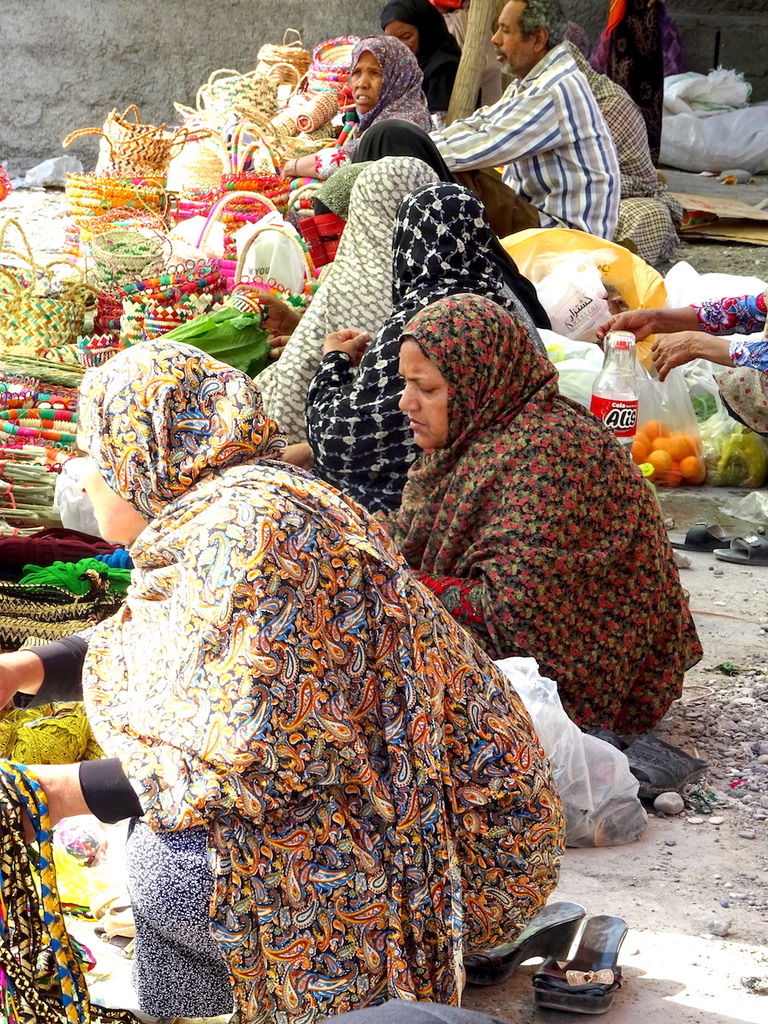
We’d secured a ride with a Beluch man in his truck, laden with polystyrene blocks, as far as Minab, which hosts the region’s most colourful market every Thursday. The town sits just back from the coast and was part of an ancient spice route linking Arabia, Persia, Africa and India. In vivid contrast to the traditional black chadors that dominate most markets in Iran, Bandari ladies dress in their brightly patterned chadors and matching headscarves. Many of them wear the traditional embroidered masks, which to the initiated can reveal their history, village and social status. Huddles of women from around the province chatter away in Farsi, Urdu or Arabic, selling fabrics, tobacco and the tasty fermented fish ‘jam’, a flavour that dominates the unique cuisine of the region.
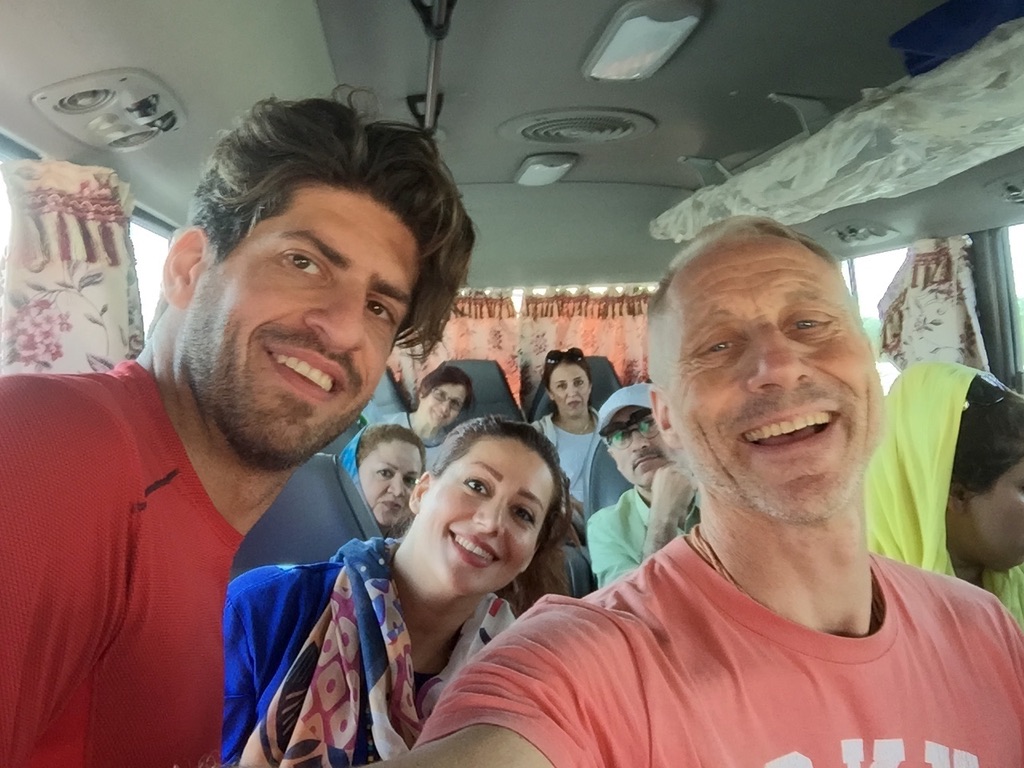
Before finally making it to the islands an unmissable opportunity presented itself. The flexibility of our schedule – coupled with the famous Persian hospitality – landed us in a minivan with 16 holidaying Tehrani ladies! Iranian tour groups are legendary (I’d read hilarious accounts of their antics in the wonderful ‘Land of the Turquoise Mountains’ book) and I found myself squeezed in a van between an Islamic scholar and a car factory owner. Among the group were also visiting Iranian ex-pats from Australia and the UK. Most of the women favoured a practical approach to the Islamic dress code – tour company baseball caps, sun visors and trainers. Many were divorcees (Iran’s divorce rate is around 25%) enjoying their new-found freedom. Hadi, the local Tour Leader, may have been a little scant on information – but he was big on entertainment! Everyone revealed their occupation, marital status and the last book they read. After playfully checking with our Islamic scholar, singing and dancing was officially approved – and the fun commenced.
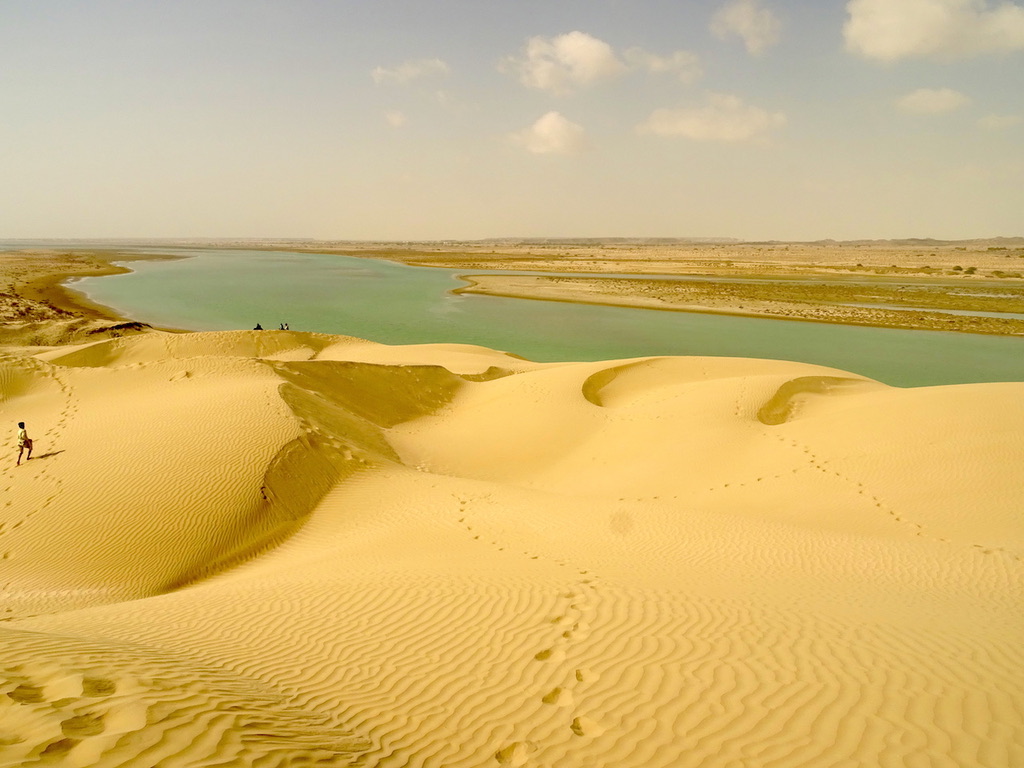
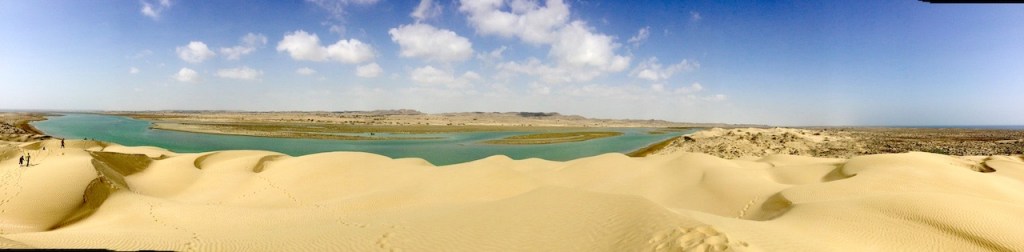
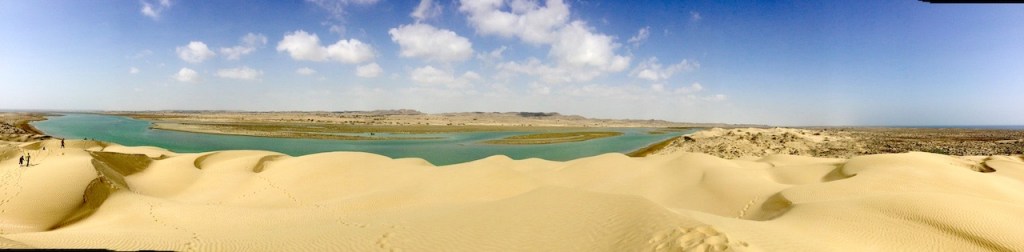
Boarding a couple of speed boats with our new friends we jetted around a stunning estuary system past the remains of an ancient settlement, to a spot where we were surrounded on all sides by towering dunes. After clambering comically knee deep in sand to the top for a photo shoot, we were gifted a 360 degrees panorama of the dunes plunging dramatically into the turquoise waters of the Persian Gulf.
No matter how many times I return to Iran, I’m still left breathless by the natural beauty – in places unknown to most Iranians on occasions.




 The Lonely Chopstick