
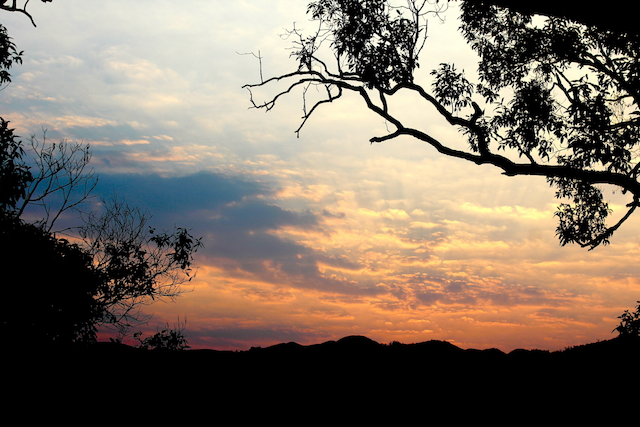
As dawn breaks the daily procession of barefoot saffron robed monks line the streets and alleys of towns and villages collecting alms from local families. In Luang Prabang, the golden roofs of their temples glisten peacefully between the two rivers of the peninsular.
In the mountains a shaman, wrapped in a phaa sabai (healing cloth), chants and dances. He calls upon the ancestors to release the power of mythical figures hidden in the design of his cloth to chase away evil spirits. Many Laotians believe these animist traditions, that predate and now coexist with Buddhism, influence the events of their lives. A bad spirit can cause sickness and death and influence a whole village to move.
It was this physical and spiritual environment that appealed to European explorers and writers who penned tales of a mystical land where nature still ruled and people embraced it, rather than destroyed it. As development carves into the jungles and rivers, these phi (spirits) are being disturbed..
Less than an hour outside of the UNESCO World Heritage Town of Luang Prabang bulldozers, diggers and cranes are carving out huge chucks of the mountainside. The foundations are being laid for Luang Prabang railway station. The former royal capital, only linked to Vientiane by paved road in the 90’s, will soon have an international station juxtaposed among the forests, mountains – and spirits – of the countryside.
After years of the affectionate Lao PDR (‘Please Don’t Rush’) tag, things are moving. Fast. The proposed ‘Battery of SE Asia’ is already on charge; squads of Chinese workers are blasting rock, boring tunnels and building transit ports beside a once sleepy Mekong. 75 tunnels will be cut and 167 bridges built for The China – Laos railway, linking a further six countries to this once sleepy Asian paradise. Over 100 dams are under construction or consideration, with Laos projected to supply more than 10% of the regions power by 2025.
In the capital, construction around the World Trade Center towers ever closer to the heavens. Not even the phi that dominate Lao culture can halt progress as the country strives to become a ‘developing’ nation.
In a way it is this contrast between development and tradition that makes Laos so interesting to the traveller.
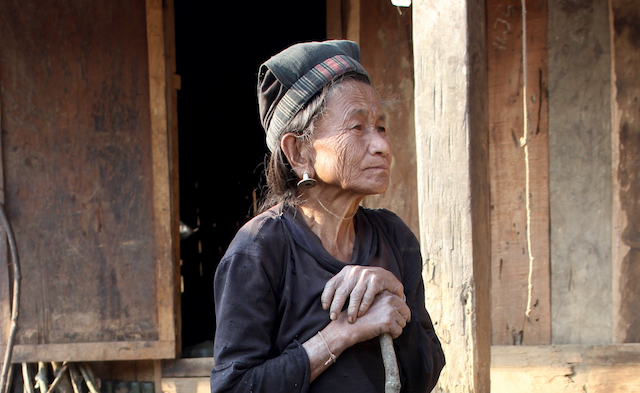
Despite large chunks of the region being in developers hands, it’s still possible to meander timelessly for a couple of weeks through limestone karsts, along stunning rivers and among dusty kids, toothless grandmothers and fisherman, experiencing the ‘Lao state of mind’. It’s addictive; one traveller referred to suffering from ‘Lao-less-ness’ after returning home.
To truly understand a country you have to journey through it. Bouncing from city to city deprives you of the soul, the people, the agriculture and the geography. 70% of the Laotians live in the countryside, so to understand Laos you have to travel through it. Not by high-speed train – but on the single lane mountain paths and along rivers, deep into the soul of the country, into wilder Laos.
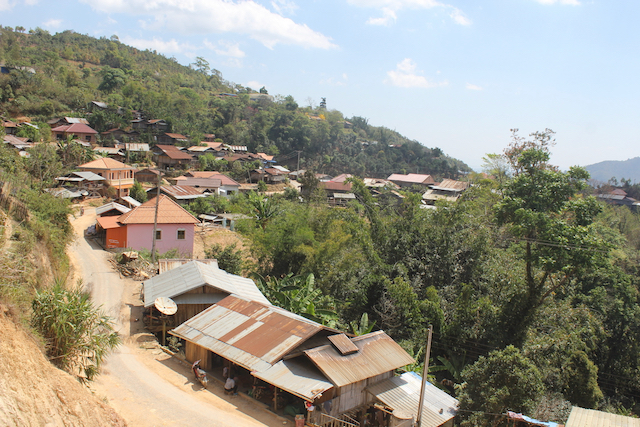
This spring I led a small group into the mountainous, ethnically diverse, northern provinces of the country. These areas were strategically important during the second Indo China war, with Phonsavan emerging from the craters and ordnance to become a bustling new frontier town. From this forested north eastern plain we took a stunning seven-hour journey, ascending into the clouds before winding down dramatically into sun-drenched valleys of dusty Hmong and Khmu villages. This is Laos at its best; thatched wooden houses clinging impossibly to the side of mountains or besides rivers and streams. Clusters of traditionally dressed villagers, with baskets on their backs emerged from the jungle as we approached their tiny settlements. Slowing down to negotiate a safe route through grubby toddlers, nervy chickens and dozing buffalo gave time to observe the array of village industries – basketwork, weaving or broom making.
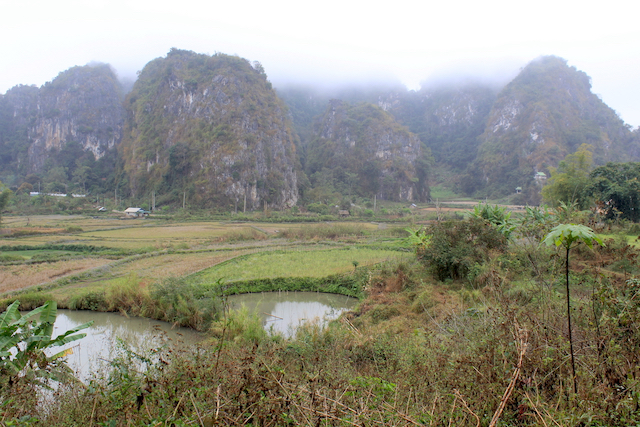
Our nocturnal arrival at a modest guesthouse was spectacularly justified the following morning – as we awoke nestled among the towering limestone karsts of Vieng Xai. This tranquil village holds a tragic secret; the clue is in the name – ‘City of Victory’. Here among and mountains and caves the Lao communist leaders built a city of more than 20,000 people and sheltered from the nine year onslaught of American bombs, before emerging to march triumphantly on the capital in 1975. The revolutionary leaders caves, set among stunning gardens, have been beautifully restored as a poignant reminder of the Lao people’s struggle for independence.
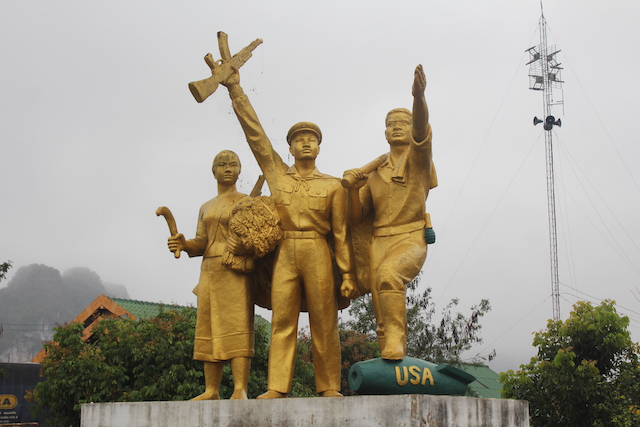

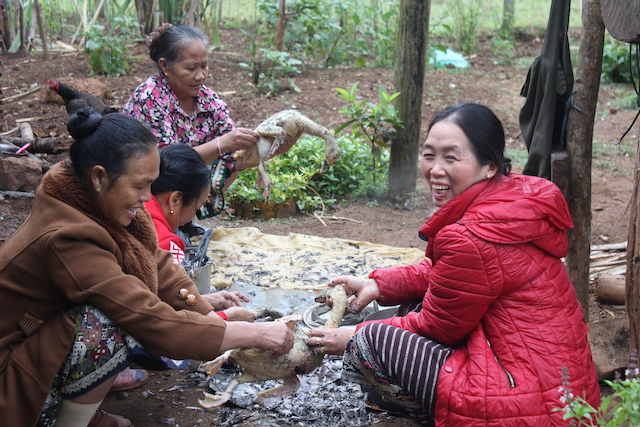
Fittingly it was International Women’s Day when we arrived, and the revolutionary spirit still prevailed among groups of ladies sat around preparing food, singing songs – and consuming more than a few Lao beers! The peace, tranquility and natural beauty today compared to the bloody struggle of the past make Vieng Xai one of Laos’ most moving outposts.
Our journey would now return east from the Vietnam border areas towards the Ou River, which would eventually take us north towards China. Enveloped in early morning mist and cloud, another stunning mountain road led us to an overnight jungle adventure in Laos’ oldest National Park, Nam Et.
A two-hour dart in small boats along the river ferried us to our cozy jungle huts. At dusk we sat by a fire at a salt lick beside the Nam Nern River enjoying dinner prepared by villagers, served on huge banana leaves. As the sky blackened we drifted Apocalypse Now style downstream in eerie staring looking into the jungle for the red eyes of loris, civets and deer.
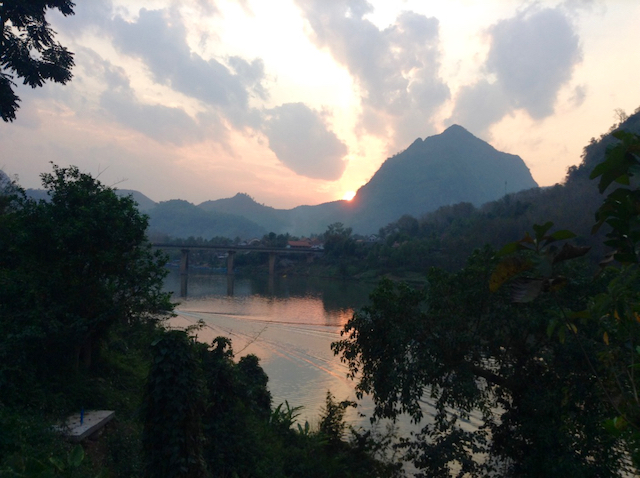
The following afternoon we once again twisted down from the heavens to the small riverside settlement of Nong Khiaw. Our arrival was timed perfectly to enjoy the lazy Laotian sun disappearing beyond the stunning limestone peaks.
No need for morning calls here as dawn arrived with the pug-pug sound of ‘long tail’ fishing boats cutting through the morning mist. From here the Ou River weaves a course south, flowing into the Mekong River at the sacred Pak Ou caves. However, our route took us upstream to enjoy one of the countries most spectacular river journeys. We spent the next two days on the river, journeying towards China between towering karsts, rapids, river beaches and remote villages. Boat travel can be timeless; sometimes the only thing that changes is the course of the river. The following day, however, we witnessed – for the first time on our journey – the changes happening in the countryside.
A series of huge concrete dam walls towering hundreds of metres above the river were juxtaposed among stilted villages and fishing boats. Along the riverbank houses had been marked with red paint to indicate they would need relocating. Further upstream an operational dam, the first of seven planned along the Ou River, finally punctuated our route. It took two a bumpy two hours in a truck to negotiate a route around the dam, where we rejoined the river to the north. The waters that once flowed freely into the Mekong now rose high up the banks, drowning trees in a permanent flood. Our boats steered a path through the wooden frames of houses now submerged in the newly formed reservoir. According to tradition, these pillars are where the spirits of the ancestors live. Bad luck has already come to this village.
Thankfully, Phongsali has escaped this development, and with a new provincial capital being built elsewhere, the charm of this small settlement nestled among tea plantations remains intact. Most of the people here are ethnic Phu Noi, traditional hunter-gatherers whose beliefs are in the spirits and ancestor worship. Traditional costumes colour the lively market, where appetizing, organic fruit and vegetables are sold alongside traditional medicines. The quaint cobbled streets of the old Chinese quarter are a reminder of an era when settlers assimilated into a community over time – rather than arriving, extorting whatever they can and moving on.
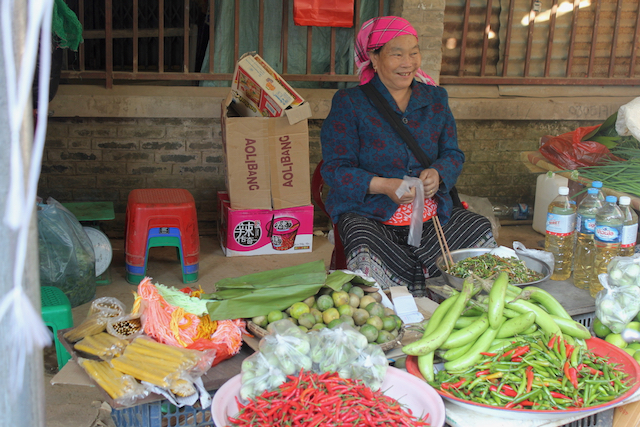
Phongsali has the feel of a town peacefully going about its business, unaffected by the sea change happening elsewhere in the country. There is little western influence and, aside from a fantastic ethnic museum, no tourist infrastructure – a real glimpse of a forgotten Laos.
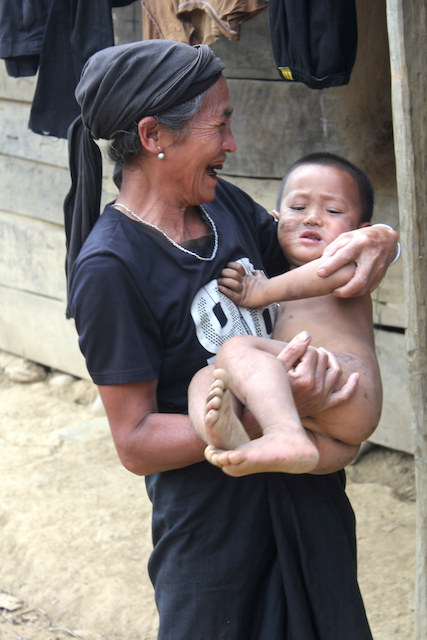
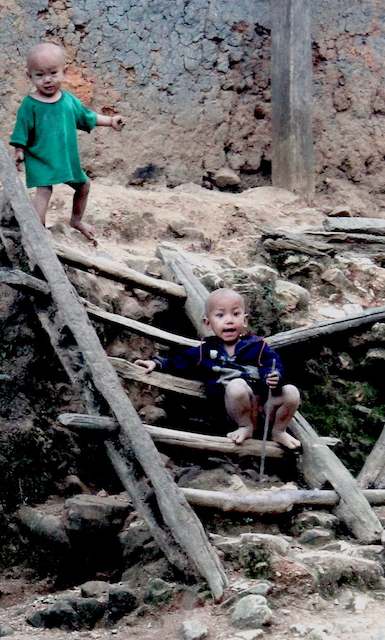
‘Homestays’ can ring alarm bells; villagers nobly try to make things as comfortable as possible for their guests, often unwittingly diluting the experience. This certainly wasn’t’ the case at the Mouchi village of Jerya. After a 2-hour 4WD ascent along a dirt road and another couple of hours on foot we arrived at the remote village. At times it could be an uncomfortable place, not just physically, witnessing first hand the harsh environment that many Laotian ethnicities survive in. Sat beside the fire, eating squashes and a freshly killed chicken, we were gifted an incredible surprise. Beyond the silhouettes of mountains, a huge new moon rose, to the beautiful soundtrack of the village children singing happily in the valley below. An unforgettable, unscripted, moment in time.
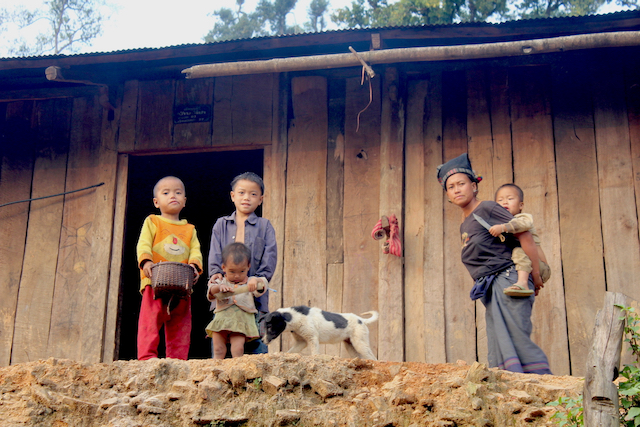
After almost two weeks our adventure in Wilder Laos was coming to an end. From the improvised village beds, where local ladies attempted hilariously to give a welcome massage, we moved on to Muang La Resort built beside the hot springs. A chance to peacefully soak away the aches and enjoy a little luxury before our final river journey led us along the Mekong to Luang Prabang.
Stunningly located at the confluence of the Mekong and Nam Khan rivers the old town peninsular of Luang Prabang receives close to a million tourists annually. For many of these visitors this is Laos. There is no denying the charm of the saffron robes, coloured lights and mouthwatering restaurants, but after the remoteness of our experience it felt a little like arriving in Disneyland.
One of the group summed it up perfectly by saying ‘My stay in Luang Prabang only heightened the experiences we’d shared together on the trip…we’d seen most of the stuff that others were learning about in museums and exhibitions in its natural environment’.
That’s the essence of travel; journeying through a country seeing how people live, farm and relax through our own personal experiences. Like the Phi, spirits, we had taken a trip through the past to the present – with an uncomfortable glimpse into the future.
July, 2017
 The Lonely Chopstick