
Sharing the wonderful Persian cuisine with my guests is one of the best parts of my job as a Tour Leader – Here’s a rundown on what you might expect to find on your plate in Iran…
As well as its Zoroastrian fire temple and burial towers, Yazd is famous for its sweets. Today we spent twenty minutes in the Khalife Rahaber confectioners – along with a string of local people – queuing patiently to enjoy Yazd’s (some say Iran’s) favourite sweets. We soon learnt the ritual involved; choose your favourite – ghotab, sugary almonds, proved most popular – write it down and hand in your request slip. Once they arrive on the packing counter you receive a bill, take it to the cashier who issues a fourth ticket – which finally allows you to claim your treats.
Iranians love Fast food. Although the Nazi Tweetie kebab shop (complete with yellow chick logo) has sadly disappeared, I’ve found Kentacky Fried Chicken, Star Burger and TFC (Tehran Fried Chicken) on my travels here. Haida is the Iranian equivalent of Subway – a sandwich chain for spam lovers. In Tehran’s middle class shopping streets disturbed hot dogs lurk inside stainless steel warmers. I’m still amused by the paradox of a black cloaked grandmother stuffing that ultimate symbol of the ‘Great Satan’ – a burger – into the hood of her chador. It’s not all bad though – fresh potatoes produce the fattest chips in autumn along with bubbling vats of hot caramalised beetroots while fresh juice stalls offer some zing to cleanse the yang of the grease.
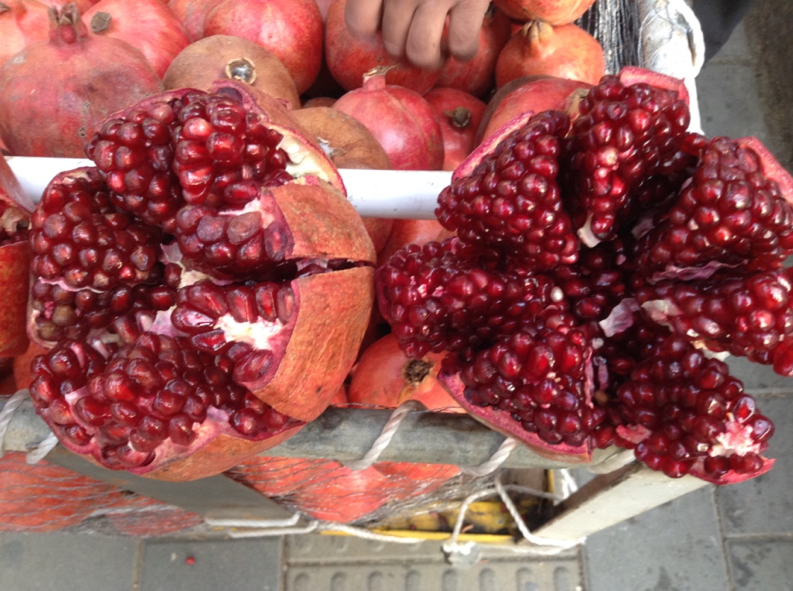
Don’t be fooled into thinking Iranian food all revolves around kebabs, the skewers of life, though. Real Iranian food is tasty and diverse. There are vegetarian dishes too! As with everywhere the best cooking is done in the home. Tonight, we are staying with a host family in the Bavanat valley. So not only do we get to explore the Sassanian fortress, walk in the walnut forests and enjoy the Friday holiday with the locals – we also get to taste truly home cooked food. Our host, Nasim, served us a tasty lamb stew (koresh) with aubergine and beans for dinner. Best of all though was Fesanjan, a rich dish made with chicken in a pomegranate and walnut sauce. I played my part in preparing this, my favourite dish, by crushing fresh Bavanat Valley walnuts for the sauce.
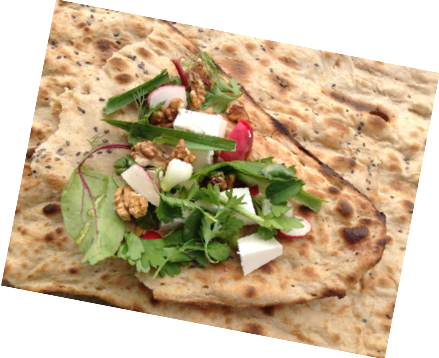
Bread, non, is to be taken seriously – and never discarded. It’s the men folk who queue for the different varieties – tafftoon, lavash, barbari or sangak – the latter which is traditionally baked on small stones. Sheets of wafer thin lavash are folded and tucked under the arm like the morning paper. Today I waited patiently in a queue at a Yazd bakers watching dough being stretched and thudded onto the interior of a clay tandoor. Minutes later half a dozen circular flatbreads – each a metre in diameter and generously flecked with nigella seeds – were stacked up in front of me. My favourite way to enjoy this warm tafftoon, is with tasty paneer, creamy Iranian feta – and a bunch of fresh mountain herbs, hand crushed walnuts and a twizzle of local honey.
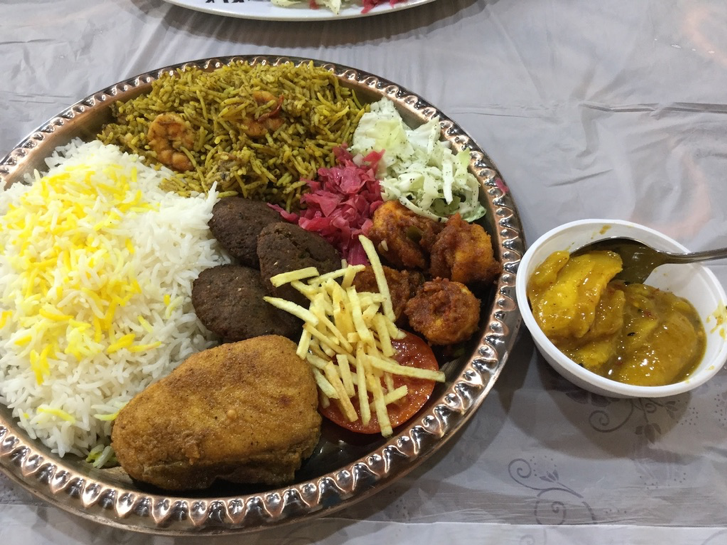
Rice, cello, is just as important as the bread. Extra-long grains of fluffy home grown rice are mixed with zoresh, tiny red barberries, beans, herbs or saffron. The popular dish of zoresh pollo combines tender chicken quarters with the tart barberry rice. Akbar Joojah is another tart northern speciality, this time marinated fried chicken with a pomegranate sauce. Another uniquely Persian dish is tachin, where yoghurt, saffron and eggs are added to the rice pan to create a tasty baked crust. The crispy crust from the bottom of the rice pot, Tahdig, is so good it’s almost excluded from the no-no-no -yes tradition of Tarroof..
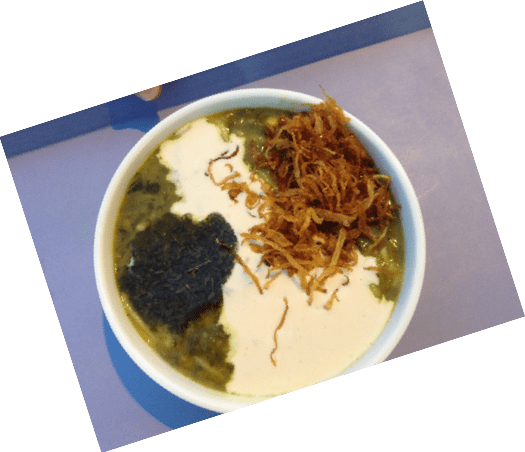
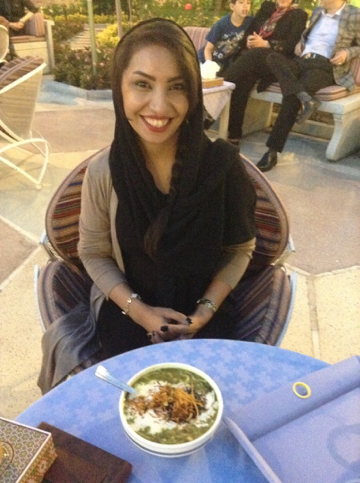
Soups here are usually made with barley. Shooli is a tasty variation, a Yazd speciality made with herbs and spinach. Ash is a thick green herby soup made with garlic, lentils, and pasta noodles, topped with caramelised onions and whey. It’s often served as the first meal after sunset during Ramadan. Fruit often flavours the Koreshes, stews – usually plums, prunes or apricots. Less fruity variations are available made with lentils, beans, or split peas. Gorma sabze is another popular stew this time made with beans and herbs – bizarrely topped with potato chipsticks!
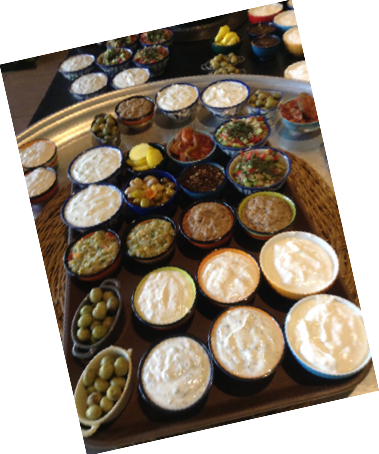
The teahouse is a great place to find more traditional dishes. Aubergine features heavily – combined with eggs, garlic and tomato for Mirza ghasemi, or with onion, garlic and mint for kashke Badamjan, – both served with a swirl of kashke, a kind of whey.
Dizi or Ab gosht (water meat) is probably the most popular teahouse dish which deserves some explaining. A red-hot pot of lamb, beans, vegetables and spices is first decanted to separate the tasty broth. After some serious pummelling of the ingredients they are scooped up on bread and eaten with the broth. Traditionally dizi is accompanied by dough (pronounced ‘dook’), a salty yoghurt drink with a hint of mint or basil.
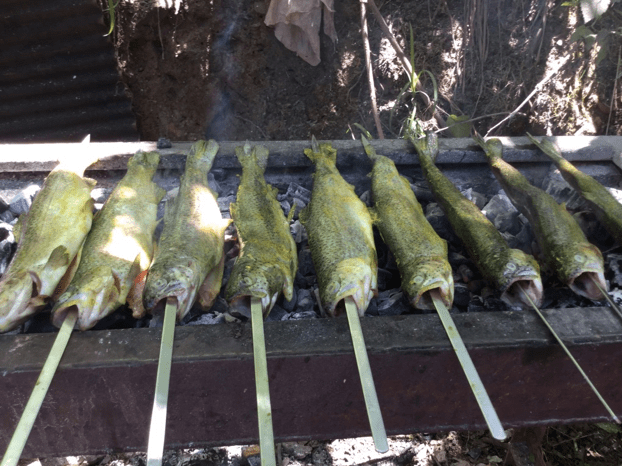
Away from the Persian Gulf, the freshest fish I have found is in mountain town of Polour, sixty kilometres east of Tehran. Huge trout are whipped from the nearby Lar Lake, butterflied, smothered in saffron butter and bbq’d on coals beside the lake – all within minutes of the fish blowing their last bubbles. The spiced seafood cuisine, sharp mango pickles and edible soil of Baluchistan and Hormozgon provinces warrant a separate blog…
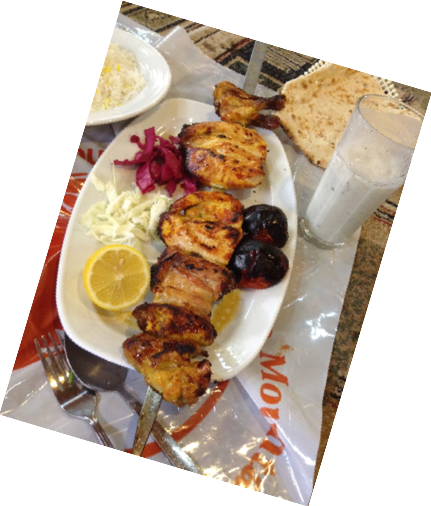
Finally, to those kebabs I mentioned at the start! Iranians take their skewers seriously. Kubideh, seasoned minced lamb is the most popular with Iranians. Joojah, chicken kebab, is pieces of breast meat seasoned with saffron, lemon and spices. We had the best in Iran in Shiraz yesterday. Can’t decide? Then bacteri (from Bactrian, the two humped camel) is a combination of both. King of the Persian kebabs though is always the Chelo kebab – made with the freshest marinated lamb fillet.
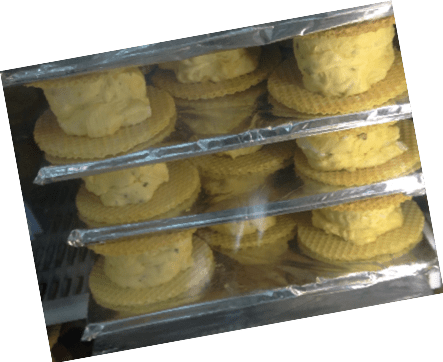
Still hungry? Maybe a dessert – how about some saffron ice cream with pistachios…?
 The Lonely Chopstick
I spent a lot of time travelling around Iran and at times did feel that it was lamb kebab for breakfast, lunch and dinner but had wonderful freshwater fish in Kashan and a particularly wonderful buffet of everything in Yazd. But one thing stands out and it was a very basic chicken and rice dinner in a tiny establishment in Firuzabad. Basic, traditional, filling and unbelievably tasty. There certainly is an untapped menu to find, but you need to go there to experience it fully.
LikeLiked by 1 person